
Corporate parties and events: a planner's guide
- Jeff Borchert

- Jun 20
- 8 min read

TL;DR:
Corporate events are essential for strengthening team cohesion, networking, and achieving company goals. Proper planning starts with defining the purpose and then building the event around it, considering timing, budget, and venue booking. Interactive activities and measurable post-event feedback ensure engagement and demonstrate success.
Corporate parties and events are purposeful business gatherings designed to strengthen team cohesion, advance networking, and support measurable company objectives. They are not perks or afterthoughts. Done well, a company celebration or team-building event carries the same weight as a product launch or sales kickoff. Whether you are organising a holiday party for 30 people or a multi-day conference for 500, the fundamentals of corporate event planning stay the same: define the purpose first, then build everything else around it.
How to plan corporate parties and events effectively
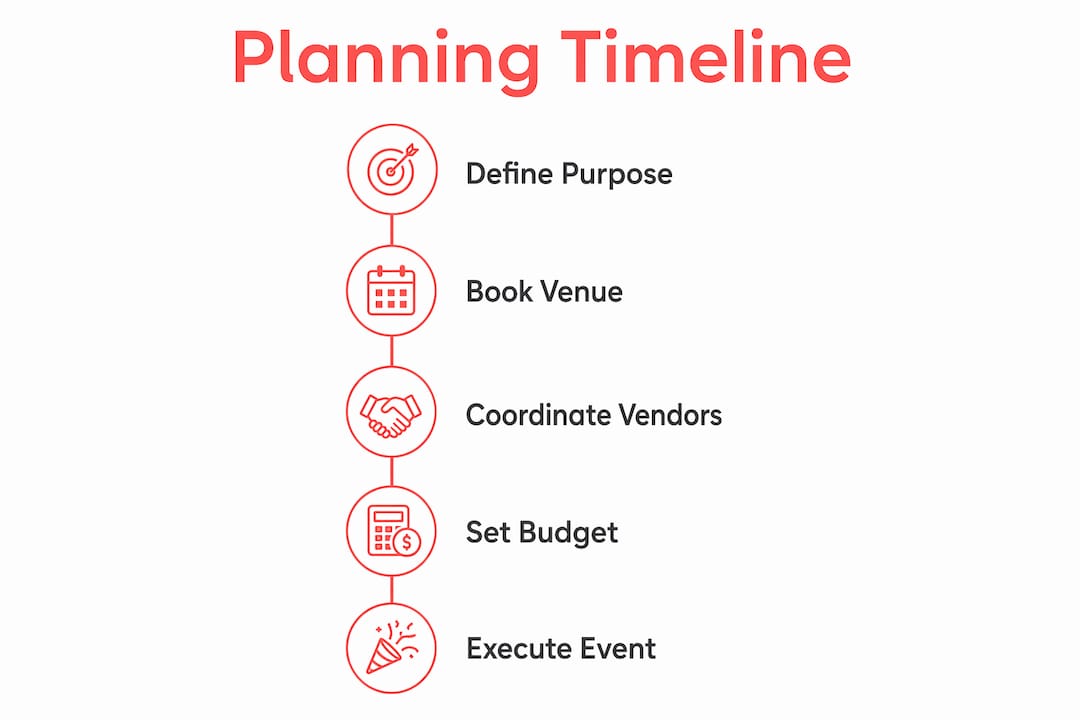
The most common planning mistake is defining an event by its format before defining its purpose. Defining the “why” first dictates every downstream decision, from venue choice to vendor selection to how you measure success. A team-building event for a remote workforce has completely different requirements than a client appreciation dinner. Start with the outcome you want, then work backwards.

Build your timeline around event size
Planning timelines are not one-size-fits-all. Groups under 50 need 4–6 weeks of lead time, while larger events or anything scheduled during peak seasons require 10–12 weeks or more. That gap matters. A 200-person gala in december competes with every other company doing the same thing. Start earlier than feels necessary.
For major urban markets like Calgary, Toronto, or Vancouver, book your venue 10–12 months early to secure availability and avoid premium pricing. Venue availability is the single biggest bottleneck in corporate event planning. Everything else, including catering, AV, and entertainment, can be confirmed later. The venue cannot.
Budget with a clear breakdown
A standard evening corporate event runs $75–$150 per person, with the following recommended allocation:
Venue: 30–40% of total budget
Catering: 20–25%
AV and production: 10–15%
Travel and lodging: 15–20%
Contingency buffer: 10–15%
The contingency line is not optional. Unexpected costs appear at every event, from last-minute AV rentals to additional staffing. Planners who skip the buffer end up cutting corners on the things guests actually notice.
Coordinate vendors like a project manager
Mid-size events of around 200 attendees typically involve 10–20 vendors. Poor coordination between those vendors is the leading cause of budget overruns and day-of failures. Assign one internal point of contact for all vendor communication. Create a shared run-of-show document and distribute it at least two weeks before the event.
Unifying AV, staging, and lighting under a single production partner prevents the technical mismatches that derail otherwise well-planned events. When three separate vendors handle sound, lighting, and staging independently, gaps appear. One partner owns the whole picture.
Pro Tip: Book your venue before you confirm any other vendor. Every other timeline depends on it.
How do you choose the right venue and format?
The venue and format you choose send a message before the event even begins. A formal ballroom signals hierarchy and ceremony. A rooftop patio signals celebration and informality. Neither is wrong. The question is whether the setting matches what you are trying to accomplish.
Scheduling events during work hours and in accessible locations increases attendance, particularly for remote or suburban team members. An after-hours event downtown creates a real barrier for employees who commute or have family commitments. If your goal is full participation, make it easy to show up.
Venue types and their best uses
Venue type | Best fit |
Hotel ballroom | Large galas, awards nights, annual conferences |
Restaurant private room | Client dinners, small team celebrations |
Rooftop or patio space | Summer socials, casual networking gatherings |
Off-site retreat centre | Multi-day team-building events, leadership offsites |
Company office or boardroom | Internal town halls, quick-win team lunches |
Experiential formats consistently outperform passive ones for engagement. A cooking class, a collaborative art project, or a guided city tour creates conversation and shared memory. A keynote speaker followed by cocktails does not, unless the networking structure is intentional.
Choose venues with natural breakout spaces to encourage smaller group conversations
Prioritise parking, transit access, and proximity to where your team actually lives
Confirm that the venue’s AV capabilities match your programme before signing the contract
Ask about exclusive-use options if your event includes confidential business discussions
Pro Tip: Visit the venue in person at the same time of day as your event. Lighting, noise, and foot traffic change dramatically between morning and evening.
What activities actually engage employees at corporate parties?
Passive entertainment is the fastest way to lose a room. Interactive formats like VR experiences, escape rooms, and chef-led culinary stations build stronger interpersonal bonds than spectator-style entertainment because they require collaboration. When people solve a problem together, they remember each other differently.
The concept of experience architecture applies directly here. Rather than filling every minute with scheduled content, design the event’s energy intentionally. Open with something that gets people moving and talking. Build toward a shared peak moment. Close with something warm and memorable. The structure shapes how people feel when they leave.
Strong activity options for corporate parties and professional networking gatherings include:
Immersive VR team challenges: Groups compete or collaborate in shared virtual environments, ideal for tech-forward company cultures
Culinary stations with a chef: Guests cook together in small groups, which breaks down hierarchy naturally
Escape room formats: Problem-solving under time pressure reveals team dynamics and builds trust quickly
Trivia or game show formats: Low barrier to entry, high energy, works well for mixed-tenure groups
Collaborative art or mural projects: Leaves a physical artefact the team can display, reinforcing shared identity
The key is matching the activity to your company culture. A conservative financial services firm and a creative agency both benefit from team-building events, but the right format looks very different for each.
Pro Tip: Give attendees a choice between two or three activity tracks. Autonomy increases buy-in and reduces the awkward “I don’t want to do this” energy that kills group momentum.
How do you measure the success of a corporate event?
Success is not a feeling. Set measurable objectives before the event, not after. If the goal is networking, track the number of new connections made. If the goal is team cohesion, run a short pulse survey within 48 hours. If the goal is brand awareness, count the social media posts and media mentions generated.
Attendee feedback is your most direct data source. A three-question post-event survey sent within 24 hours captures honest impressions before memory fades. Ask what worked, what did not, and what attendees would change. The answers build your planning template for next time.
Define objectives upfront: Write down two or three specific outcomes you want the event to produce
Track participation metrics: Attendance rate, session participation, and activity completion all signal engagement
Collect structured feedback: Use a short digital survey within 24 hours of the event
Calculate ROI where possible: Compare event cost against measurable outcomes like new client introductions or employee satisfaction scores
Document and archive: Save vendor contacts, run-of-show documents, and budget actuals for future planning
Event photography and technology serve a dual purpose here. Photos capture the energy and key moments of the event for internal communications and marketing. They also function as a record of attendance, engagement, and branded details that leadership can review after the fact.
Share highlight images with attendees within 24–48 hours to extend the event’s positive momentum
Use photos in internal newsletters, LinkedIn posts, and recruitment materials
Brief your photographer on the three or four moments that matter most before the event starts
Pro Tip: Present event data to leadership in a one-page summary. Numbers and photos together make the case for continued investment far better than anecdotes alone.
Key takeaways
Successful corporate parties and events require a clear business objective, a realistic budget with a contingency buffer, and an intentional experience design that prioritises interaction over passive entertainment.
Point | Details |
Define purpose first | Set a measurable business objective before choosing a venue or format. |
Plan timelines by size | Small events need 4–6 weeks; large or peak-season events need 10–12 weeks or more. |
Budget with a breakdown | Allocate $75–$150 per person and reserve 10–15% as a contingency buffer. |
Choose interactive formats | Activities like escape rooms and culinary stations build stronger bonds than passive entertainment. |
Measure and document | Use post-event surveys, participation data, and professional photography to assess impact. |
What I have learned from photographing corporate events
Every corporate event tells you something about the company that organised it. I have been in rooms that felt like a genuine celebration of the people in them, and I have been in rooms where the catering was excellent but the energy was flat. The difference almost always comes down to one thing: whether the organiser started with the people or started with the logistics.
The planners who get it right ask “what do we want our team to feel when they leave?” before they ask “what venue fits 200 people?” That question changes everything. It shapes the activity choices, the room layout, the run-of-show, and yes, the photography brief.
One pattern I see repeatedly is last-minute venue booking. Teams spend months on the programme content and then scramble to find a space three weeks out. The venue sets the tone for everything else. Booking it late means accepting whatever is left, and whatever is left is rarely the right fit.
The shift from passive to interactive formats is real, and it matters. I have watched escape room challenges and chef-led cooking stations do more for team cohesion in two hours than a year of all-hands meetings. When people are doing something together, they are present. That presence shows up in the photos, and it shows up in how they talk about the company afterward.
My honest advice: treat your corporate event like a strategic investment in culture, not a line item to minimise. The companies that do this well have employees who talk about those events for years.
— Jeff
Let Itsjeffb document your next corporate event
Great corporate events deserve great documentation. At Itsjeffb, we cover Calgary corporate parties and professional networking gatherings with a focus on real moments, key people, and branded details that tell your company’s story. No disruption to the flow of your event. Just clean, natural images your team will actually use.
[
Whether you need next-day highlight images for your LinkedIn or a full gallery for internal communications, we build the coverage around your goals. Check out our event photography pricing to find the right package for your team. Let’s make sure your next event is documented with the care it deserves.
FAQ
How far in advance should you book a corporate event venue?
Book at least 10–12 months early in major urban markets to secure availability and avoid premium pricing. For smaller events under 50 people, 4–6 weeks is the minimum lead time.
What is the average cost per person for a corporate event?
A standard evening corporate event costs $75–$150 per person, with venue and catering accounting for roughly half the total budget.
What activities work best for team-building events?
Interactive formats like escape rooms, VR challenges, and culinary stations outperform passive entertainment for building genuine team bonds. They require collaboration, which creates shared memory.
How do you measure the success of a corporate party?
Set measurable objectives before the event, then collect structured attendee feedback within 24 hours. Participation rates, survey scores, and post-event photography all contribute to a clear picture of impact.
Why does venue choice matter so much for corporate events?
The venue shapes the tone, accessibility, and energy of the entire event. Accessible locations during work hours drive higher attendance, especially for remote or distributed teams.
Recommended


Comments