Corporate photoshoot planning guide for businesses


TL;DR:
Careful planning and clear communication are essential for a successful corporate photoshoot that accurately represents your brand.
Choosing the right location, preparing your team thoroughly, and guiding them through styling and posture lead to authentic, professional images.
A poorly planned corporate photoshoot can cost you more than just time. Mismatched headshots, washed-out office backgrounds, and stressed-looking employees send a quiet but clear message to anyone landing on your website or LinkedIn page. That message is not the one you want. Well-planned corporate photos create consistent, confident imagery that reflects your brand identity and signals to clients and partners that your organisation is worth trusting. This guide walks you through every stage of the process, from setting your objectives to using your final images with purpose.
Table of Contents
Key takeaways
Point | Details |
Define your purpose early | Know where images will be used before choosing a tone, location, or photographer. |
Plan 4 to 6 weeks out | Early scheduling leaves room for wardrobe guidance, space prep, and employee communication. |
Location shapes everything | In-office, studio, and outdoor each create a different visual and logistical experience. |
Atmosphere drives results | A calm, positive shoot day produces far better expressions and body language in photos. |
Update images regularly | Corporate photos should be refreshed as your team grows or your brand evolves. |
What every corporate photoshoot needs to accomplish
Before you book a photographer or clear out the boardroom, get specific about what this photoshoot is actually for. That clarity shapes every decision that follows.
Are these images going on your company website? LinkedIn profiles? A press release? A pitch deck? Each of those contexts calls for a slightly different approach. A law firm presenting to institutional clients needs a tone that reads formal and authoritative. A tech startup trying to attract talent might want something warmer and more candid. Neither is wrong. They just require intentional choices.
Think through the types of photos you need:
Individual headshots for team bios, LinkedIn, and directories
Small group shots for department pages or project teams
Full team images for your homepage, press materials, or annual reports
Lifestyle or action shots showing people collaborating, presenting, or working
Corporate photos are widely used across websites, LinkedIn profiles, proposals, press releases, and internal directories. Confirming the full list of intended uses before shoot day allows your photographer to plan shot lists and lighting setups accordingly. It also prevents the frustrating back-and-forth of realising after the fact that you needed a horizontal crop for your website banner.
Pro Tip: Share your brand guidelines and a sample of your current website with your photographer before the shoot. A single visual reference is worth ten minutes of verbal explanation.
Choosing the right location
The location you choose does a lot of work. It affects the lighting, the mood, the consistency of your images, and how comfortable your team feels on the day. Choosing your shoot location early reduces day-of delays and keeps your images visually cohesive.
Here is a quick breakdown of how each option stacks up:
Location type | Strengths | Considerations |
In-office | Familiar setting, authentic brand environment, no travel required | Requires prep to clear clutter, manage ambient light, and control background |
Photography studio | Controlled lighting, clean neutral backgrounds, consistent results | Travel time for team, less contextual brand feel |
Outdoor | Natural light, relaxed atmosphere, visually dynamic | Weather-dependent, harder to schedule, lighting changes quickly |
Mobile studio (on-site) | Combines studio-quality results with the convenience of your office | Requires adequate space and access |
Mobile studio setups allow photographers to work at your office with professional lighting equipment, minimising disruption and keeping your team comfortable on familiar ground. For larger teams, this is often the most practical path.
Outdoor shoots can work beautifully for brands that want an approachable, human quality in their imagery. Just build a backup plan into your booking in case Calgary decides to remind you what November feels like in April.
Pro Tip: Walk through your planned location at the same time of day as the shoot, at least a week before. Identify where the light lands, what is in the background, and what needs to be moved or cleaned up before the photographer arrives.
Planning and preparing your team
This is where most corporate photoshoots succeed or quietly fall apart. The logistics matter just as much as the photography itself.
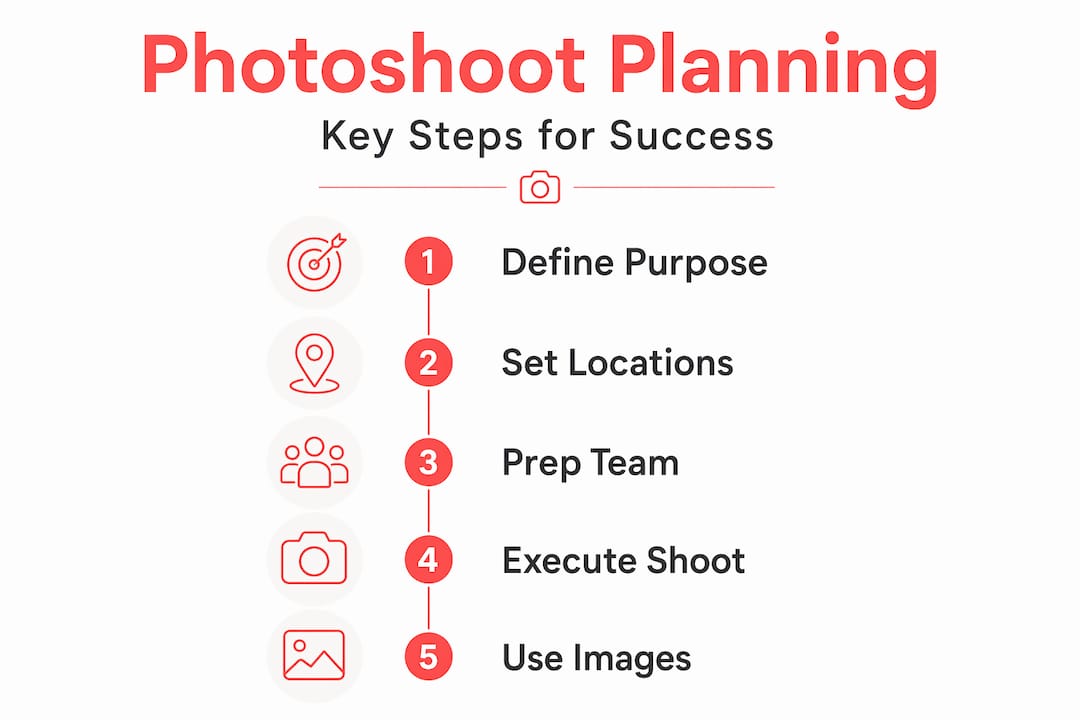
Start planning four to six weeks in advance so you have enough time to schedule sessions around meetings and travel, communicate wardrobe expectations, and prepare your space. Here is a reliable sequence to follow:
Confirm the photographer and book the date. Get a signed agreement that includes deliverables, image rights, and turnaround time.
Build a schedule with realistic time slots. Allow three to five minutes per person for individual headshots, plus buffer time between groups.
Send wardrobe guidelines to your team. Give people enough lead time to shop if needed.
Prepare the physical space. Clean and tidy the areas being photographed, adjust blinds, remove personal clutter, and test lighting.
Send a reminder and brief the day before. Include what to expect, where to go, and a few grooming reminders.
On wardrobe, be specific rather than vague. Clear wardrobe guidelines recommend solid colours and neutral tones, and suggest avoiding logos, text-heavy clothing, and reflective fabrics. A few concrete do’s and don’ts go a long way:
Wear solid, mid-tone colours (navy, grey, burgundy, forest green all photograph well)
Avoid bold patterns, stripes, and anything with large logos or text
Choose fabrics that sit cleanly and do not wrinkle heavily
Bring a backup outfit if possible
Pro Tip: Create a simple one-page brief for employees that covers the schedule, location, wardrobe guidance, and what to expect. People are far less anxious when they know the plan. Less anxiety means better photos.
Executing the shoot smoothly
On the day itself, the goal is momentum with care. You want to move through the schedule without feeling rushed, keep energy high without it tipping into chaos, and give people enough time in front of the camera to actually relax.
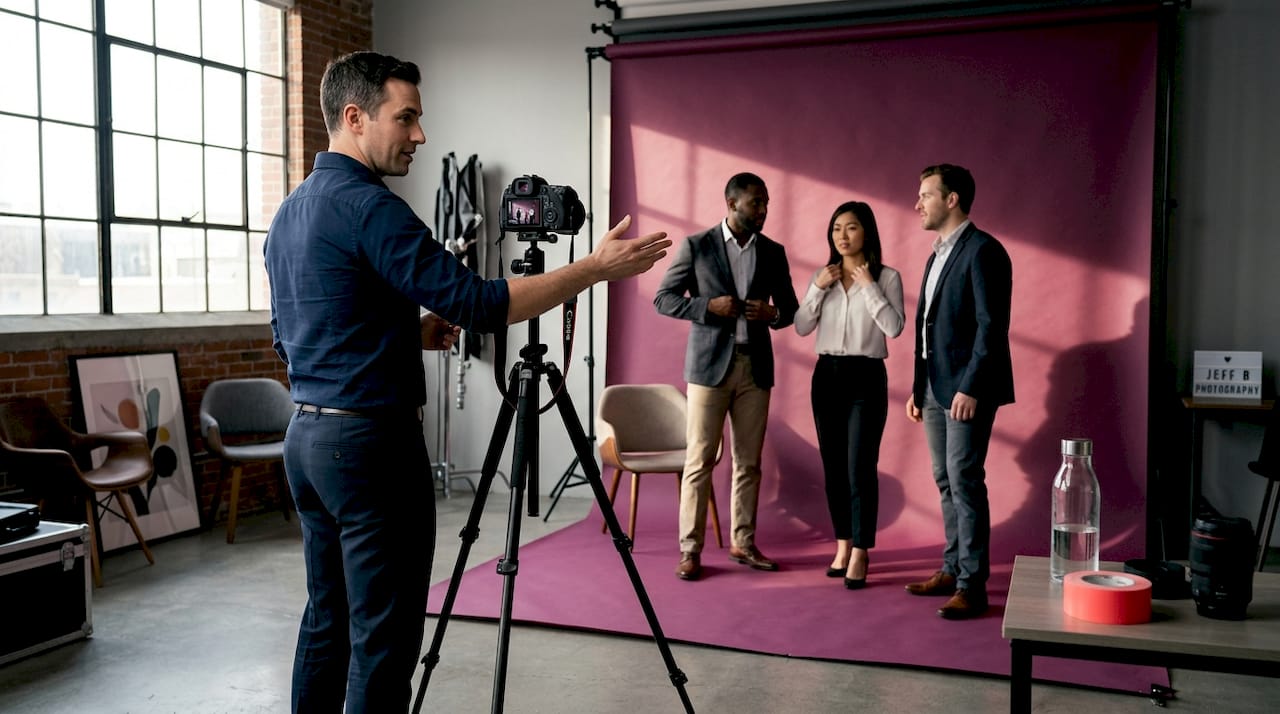
Employees feel more comfortable and perform significantly better when the atmosphere is calm and positive. That starts with leadership. If your executives show up enthusiastic and engaged, the rest of the team follows. If they treat it like a dental appointment, expect that energy in the photos.
A few practices that make a real difference on shoot day:
Brief your photographer on personality. Let them know if certain team members are camera-shy or if the culture is more casual. Good photographers adjust their approach accordingly.
Have water and light snacks available. Four hours of back-to-back photos is more tiring than it sounds.
Assign a point person. One internal coordinator managing check-ins and keeping the schedule on track saves enormous amounts of time.
Preview a few shots early. Showing someone their photo shortly after it is taken builds confidence and relaxes the next round of subjects.
Posing guidance is part of what separates a professional business photoshoot from a staff ID photo. A skilled photographer will direct posture, shoulder angle, chin position, and expression without making the session feel stiff. Understanding what makes a professional headshot effective before the shoot helps you brief your team on what to expect and why those small adjustments matter.
Pro Tip: Schedule your most camera-shy team members mid-session, not first. By then, the energy in the room is warmer, the photographer has found their rhythm, and people coming in have seen that it is not scary.
Using your images after the shoot
Great photography only delivers value if you actually use it well. The post-shoot process deserves as much attention as the planning.
When reviewing proofs with your photographer, look for:
Consistency across headshots. Similar lighting, background, and framing signals organisational discipline to anyone viewing your team page.
Authentic expressions. The best headshots feel like the person, not a performance.
Appropriate representation. Make sure the final selection reflects your full team, not just leadership.
Technical quality. Check for sharpness, clean backgrounds, and proper exposure before signing off.
Use case | Image format to request |
Website and LinkedIn | High-resolution JPG, cropped to platform specifications |
Press and media kits | High-resolution TIFF or JPG, uncropped originals |
Internal directories | Lower-resolution JPG, standardised dimensions |
Social media | Square or portrait crop, optimised file size |
Consistent headshots build trust by signalling reliability, and disjointed images create subconscious disorder for website visitors. Once you have invested in professional business photography, use it everywhere it belongs. And plan to refresh your images every two to three years, or whenever your team sees significant changes. Read more about how headshots shape corporate identity to understand the longer-term brand value of keeping them current.
My honest take on what actually makes these sessions work
I have photographed hundreds of corporate teams, from five-person startups to organisations with full floors of staff. And the shoots that go smoothly share one thing: the person who planned it cared enough to communicate clearly before the day arrived.
The biggest misconception I run into is that a corporate photoshoot is mostly about the photographer. It is not. What I can control is lighting, framing, posing, and atmosphere in the room. What I cannot control is whether your team showed up having just received an all-hands email about Q2 results, wearing wrinkled shirts, and not knowing where to go when they arrive. That is on the planning side, and it matters enormously.
I have also seen the flip side. Teams that walked in with a clear schedule, dressed well, and had a cheerful internal coordinator at the door? Those shoots feel like a celebration. The photos reflect it. People are looser, their expressions are genuine, and we often finish ahead of schedule.
The other thing I want to say plainly: leadership attitude sets the room’s temperature. Every time I have had a senior leader make the session feel like a priority rather than a chore, the entire team’s engagement lifts visibly. You do not have to be theatrical about it. Just show up on time, smile, and let people see that you are glad the company is doing this. That is enough.
— Jeff
Bring your brand to life with Itsjeffb
Ready to put this plan into motion? Itsjeffb specialises in corporate headshots and team photography right here in Calgary, with sessions designed to be efficient, guided, and genuinely stress-free for your team.
[
Whether you need on-location team headshots at your office or individual sessions at the studio, the experience is built around getting you images you are proud to put on your website, LinkedIn, and marketing materials. Check out current photography pricing to find the right fit for your team size and timeline. There is even a monthly headshot special if you want to get started with individual sessions at an accessible price point. Let’s make sure your brand shows up looking its best.
FAQ
How far in advance should I plan a corporate photoshoot?
Start planning four to six weeks before your shoot date to allow time for scheduling, wardrobe communication, space preparation, and aligning on goals with your photographer.
What should employees wear for a corporate photoshoot?
Solid colours in neutral or mid tones work best. Avoid busy patterns, large logos, reflective fabrics, and clothing with text, as these create inconsistent results across a team.
Should I book an in-office or studio session?
It depends on your brand and team size. In-office shoots reinforce your environment and brand context, while studio sessions offer controlled lighting and clean backgrounds. Mobile studio setups offer both, which is why many Calgary businesses prefer them for larger groups.
How often should corporate photos be updated?
Plan to refresh your corporate images every two to three years, or sooner if your team grows significantly, your brand identity changes, or your existing photos start to look dated on your website and LinkedIn.
What rights do I get to the photos after a corporate photoshoot?
Usage rights vary by photographer and contract. Confirm before the shoot whether images can be used across your website, LinkedIn, press releases, and internal materials, as usage rights determine how and where you can legally share the photos.
Recommended
Comments