Event photography image delivery: the 2026 guide
TL;DR:
Event photography requires rapid image capture and delivery through secure digital platforms to maximize marketing impact. Different platforms offer varying speeds, features, and suitable event types, with some providing access in under three seconds and others focusing on branded galleries or AI culling. Preparing connectivity, setting up automatic uploads, and prioritizing marketing-driven workflows ensure fast, effective photo distribution that aligns with audience needs and event timing.
Event photography image delivery is the process of rapidly capturing, curating, and distributing event photos to attendees and stakeholders through secure digital platforms for maximum marketing impact. The industry standard for full gallery turnaround sits at 3 days, but high-impact corporate events increasingly demand delivery within 24 hours. Platforms like SpotMyPhotos, FilterPixel, and Pixieset have shifted the bar further still, with image access in 2.5 seconds after capture now technically possible. For event organisers and businesses, understanding this space means the difference between photos that fuel your post-event marketing and photos that arrive too late to matter.
What are the best tools for event photography image delivery?
The right platform determines how fast your photos reach attendees and marketing teams. SpotMyPhotos uses facial recognition to deliver personalised private galleries to each attendee, eliminating the need to scroll through hundreds of group shots. FilterPixel focuses on real-time content amplification, pairing AI-powered culling with a managed distribution layer for speakers, sponsors, and social teams. Pixieset offers polished client galleries with branded delivery, making it a strong choice for corporate events and wedding photography image sharing where presentation matters as much as speed.
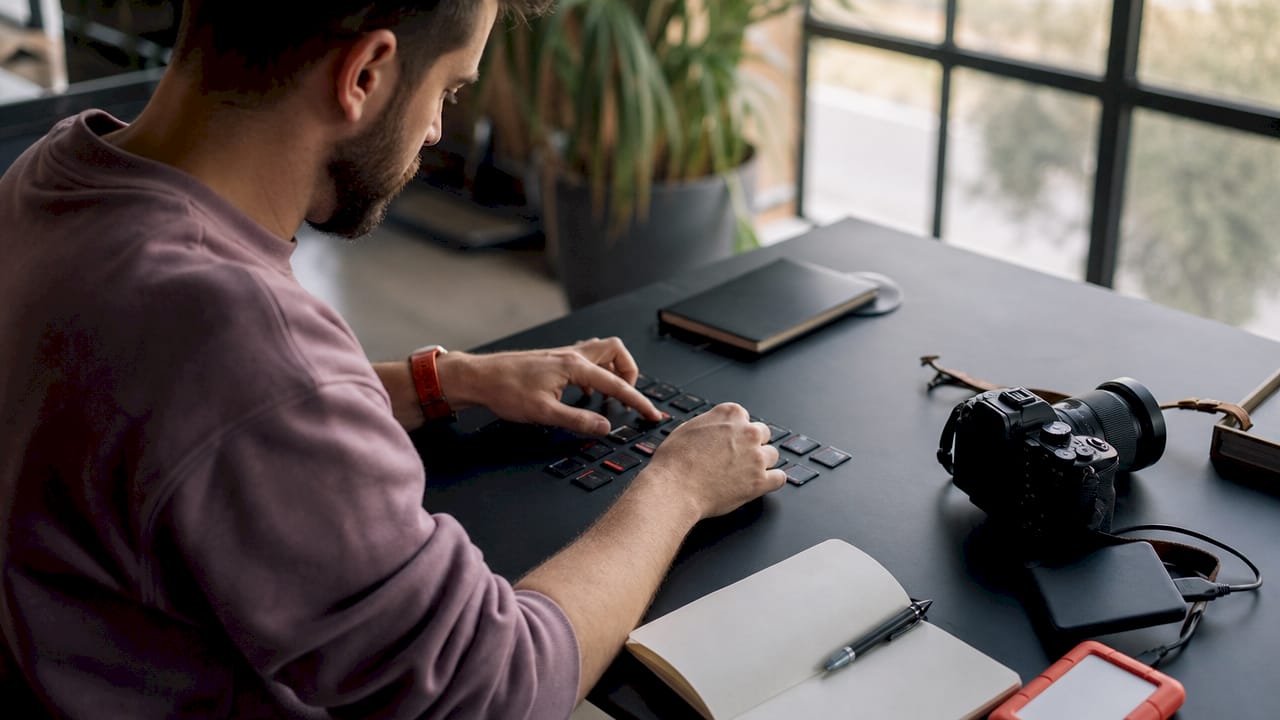
Each platform approaches digital image delivery for events differently. Here is a quick comparison of the three leading options:
Platform | Delivery speed | Key feature | Best for |
SpotMyPhotos | Near real-time | Facial recognition galleries | Large conferences, galas |
FilterPixel | Live during event | AI culling and branded overlays | Corporate and marketing events |
Pixieset | Same day to 3 days | Branded client galleries | Weddings, executive events |
Beyond the platforms themselves, delivery methods matter. SMS, WhatsApp, email, and QR codes on event signage all serve as instant access points for attendees during the event itself. Choosing the right notification channel depends on your audience. Corporate attendees respond well to email and branded gallery links, while social-first events benefit from QR codes placed at high-traffic spots like registration desks and photo walls.
Pro Tip: Test your chosen platform’s notification delivery before the event day. A gallery that sends to spam folders defeats the purpose of fast photo delivery.
How to set up an event photography workflow that delivers fast
A fast delivery workflow starts well before the photographer arrives on site. Preparation is the foundation.
Confirm connectivity. Venue Wi-Fi is notoriously unreliable. Bring a dedicated 5G hotspot or mobile router as your primary upload connection. Dedicated mobile routers bypass slow or firewalled venue networks and keep uploads consistent throughout the event.
Shoot JPEG alongside RAW. JPEG files upload and process faster. Shooting both formats gives you speed for instant sharing and full quality files for final edits.
Set up automatic upload. Configure your camera or tethering software to push JPEGs to your delivery platform the moment they are captured. SpotMyPhotos and FilterPixel both support automatic ingestion.
Run AI culling in parallel. Tools like FilterPixel analyse and sort images as they arrive, flagging the strongest selects without the photographer stopping to review every frame manually.
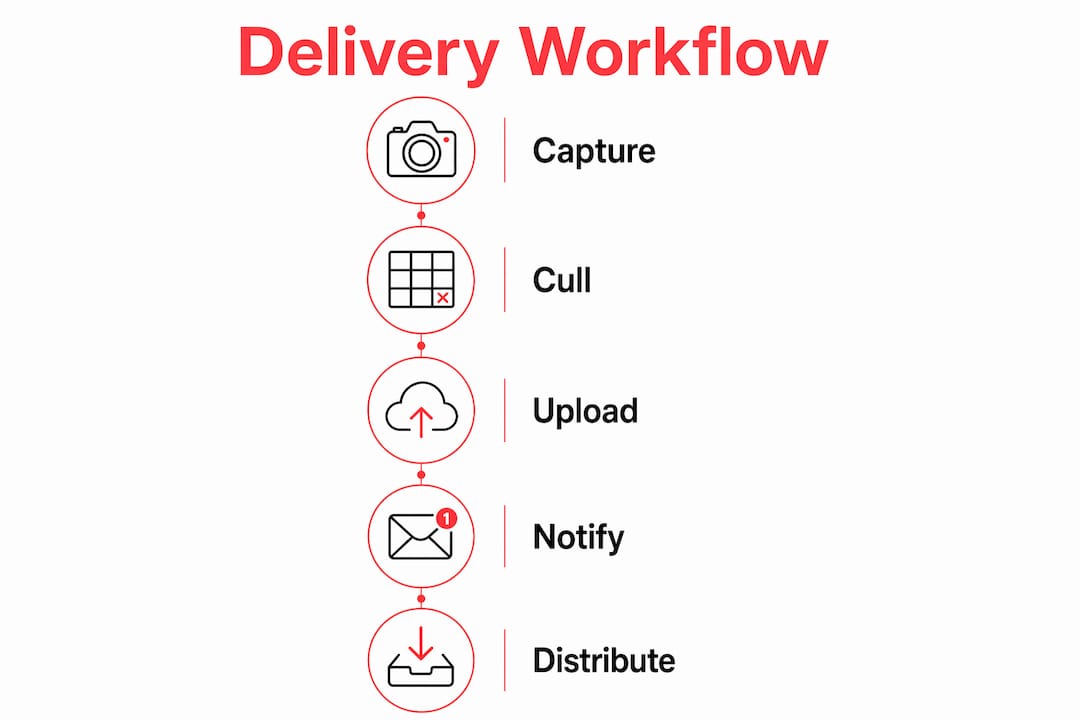
Share via QR or notification. Deploy QR codes on event signage and trigger SMS or email notifications to attendees as new galleries populate.
The workflow looks different depending on the event type. A marathon with thousands of participants needs facial recognition matching at scale. A 200-person corporate conference needs branded overlays and a curated selection ready for the communications team by end of day. A gala or awards night needs polished, same-evening highlights for social media.
Event type | Priority | Recommended approach |
Corporate conference | Speed and branding | FilterPixel with branded overlays |
Marathon or mass participation | Scale and personalisation | SpotMyPhotos facial recognition |
Gala or awards night | Polish and same-day delivery | Pixieset with curated selects |
Wedding | Quality and presentation | Pixieset or branded private gallery |
Pro Tip: Assign one person on your team to monitor gallery uploads during the event. Catching a failed upload early saves hours of scrambling afterward.
What are the best practices for marketing-driven photo delivery?
The biggest shift in professional event photo delivery is the move from artistic completeness to marketing immediacy. Marketing teams prefer a volume of strong, branded selects within 2 hours over a perfect gallery delivered two days later. That is not a compromise on quality. It is a recognition of how social media reach actually works.
LinkedIn engagement drops roughly 80% within 48 hours of an event. Posting within 2 hours of a keynote or panel session captures the audience while the conversation is still live. That window is your marketing team’s best asset, and it only opens if photos arrive in time.
Practical steps for a marketing-first delivery approach:
Prioritise curated selects over full galleries. Deliver 20–30 strong images to your marketing team within the first hour. Save the complete gallery for later.
Use branded overlays. Watermarks and logo overlays ensure every shared image carries your brand, even when attendees post independently.
Build a managed distribution layer. Assign specific image sets to speakers, sponsors, and social teams automatically, without adding work for the photographer.
Use consent-first facial recognition. Platforms like SpotMyPhotos let attendees opt in to receive only photos of themselves, which improves engagement and respects privacy.
“Delivering curated, branded selects while the event is still in progress is what separates a photography service from a marketing asset.” — FilterPixel
The marketing-driven mindset also changes how photographers shoot. Instead of waiting for the perfect composed frame, the focus shifts to capturing key moments, branded details, and recognisable faces that marketing teams can use immediately. This is a skill worth discussing with your photographer before the event, not after.
How to troubleshoot common event photo delivery challenges
Even well-planned delivery workflows hit friction. Knowing where the common failure points are lets you prepare rather than react.
Network connectivity is the most frequent culprit. Venue Wi-Fi often cannot handle the upload volume from a live event shoot. The fix is straightforward: bring your own dedicated 5G hotspot and treat venue Wi-Fi as a backup only. Some photographers carry two mobile routers from different carriers for redundancy.
Photographer bandwidth fatigue is the second major risk. Shooting, culling, uploading, and responding to client requests simultaneously is genuinely exhausting. AI-powered culling tools reduce the cognitive load by automatically flagging the best frames, letting the photographer focus on capturing rather than sorting. This is not optional for high-volume events. It is how quality stays consistent under pressure.
Speed versus quality tension is real but manageable. The solution is a two-stage delivery model. Push a curated set of 20–30 images within the first hour for immediate marketing use. Deliver the full edited gallery within the 3-day industry standard, or within 24 hours for high-stakes events. This approach satisfies both the marketing team’s urgency and the client’s expectation for polished final images.
Pro Tip: Build a pre-event checklist that includes a connectivity test, platform login verification, and a test upload from the venue at least one hour before the event starts.
How to choose the right event photo delivery service
Choosing a delivery service comes down to matching the platform’s strengths to your event’s specific needs. Speed, volume, branding, and ease of use all carry different weight depending on the context.
Key questions to ask before selecting a service:
How fast does delivery need to be? Same-day social media use requires real-time or near-real-time platforms. A post-event client gallery can use a 24–72 hour turnaround.
How many attendees will receive photos? Facial recognition platforms like SpotMyPhotos handle large volumes efficiently. Smaller events work well with Pixieset’s gallery model.
Does branding matter? Corporate events and sponsored conferences need watermarks, overlays, and branded gallery pages. FilterPixel and Pixieset both offer this.
How tech-savvy are your attendees? QR code access works well for younger, mobile-first audiences. Email gallery links suit executive and professional crowds.
What is your budget? Pricing varies significantly across platforms. Pixieset offers tiered plans accessible to smaller studios. FilterPixel and SpotMyPhotos are built for higher-volume, enterprise-level events.
For a deeper look at finding the right event photography service, the criteria above give you a solid starting framework. The best service is the one that fits your event’s pace, your audience’s expectations, and your marketing team’s timeline.
Key takeaways
Fast, marketing-driven event photography image delivery requires the right platform, a tested workflow, and a clear understanding of your event’s speed and branding requirements.
Point | Details |
Speed is a marketing tool | Posting curated images within 2 hours captures peak social media engagement before it drops. |
Platform choice matters | SpotMyPhotos, FilterPixel, and Pixieset each serve different event types and delivery speeds. |
Connectivity is foundational | Bring a dedicated 5G hotspot to every event. Venue Wi-Fi is not reliable enough for live delivery. |
AI culling prevents fatigue | Automated culling tools keep quality consistent during high-volume, real-time shoots. |
Two-stage delivery works | Send curated selects immediately, then deliver the full edited gallery within 24–72 hours. |
What I’ve learned about delivery being the real product
After shooting corporate events across Calgary, I’ve come to believe that the photos themselves are only half the job. The other half is getting them into the right hands at the right moment. That shift in thinking changed how I approach every event I cover.
The photographers who struggle with fast delivery are usually the ones treating it as a technical problem. It is actually a planning problem. If you have not sorted out your connectivity, your platform, and your culling workflow before you walk through the door, no amount of skill behind the lens will save you when a client asks for social media images by 3 p.m.
What I find genuinely exciting about where this is heading is that the tools are getting good enough that speed and quality no longer have to fight each other. AI culling, automatic uploads, and facial recognition galleries mean a photographer can focus on capturing real moments while the delivery side runs in the background. That is a better experience for everyone, including the attendees who open their phones and find a gallery of their own photos waiting for them.
My honest advice: invest in your event photography workflow before you invest in more gear. A faster lens does not help if your images are sitting on a memory card when the post-event buzz fades. And if you are an event organiser, ask your photographer directly how they handle delivery. The answer tells you a lot about whether they are thinking about your marketing goals or just their own creative process.
— Jeff
Event photography services built for fast, quality delivery
At Itsjeffb, event coverage is built around one goal: getting you images you can actually use, quickly. Whether it is a corporate conference, a gala, or a branded company event, the focus is on capturing real moments and key people without disrupting the flow of the room.
[
Same-day highlight images are available for events where social media timing matters. Branded galleries, clean editing, and a straightforward delivery process mean your marketing team is not waiting around. If you want to know exactly what is included and what it costs, the event photography pricing page has everything laid out clearly. No guessing, no surprises. Just great photos delivered when you need them.
FAQ
How fast can event photos be delivered to attendees?
Specialised platforms like SpotMyPhotos can deliver image access within 2.5 seconds of capture. For curated marketing selects, a realistic target is within 1–2 hours of the event.
What is the standard turnaround for a full event gallery?
The industry standard is 3 days for a complete edited gallery. High-impact or sales-driven events often require delivery within 24 hours to maintain marketing relevance.
Why does posting event photos quickly matter for social media?
LinkedIn engagement drops about 80% within 48 hours of an event. Posting curated images within 2 hours captures the audience while the conversation is still active.
What should I ask a photographer about image delivery before booking?
Ask how they handle connectivity on site, which delivery platform they use, and whether they offer same-day or next-day highlight images. These answers reveal whether their workflow aligns with your event marketing goals.
Can attendees receive personalised photo galleries at large events?
Yes. Platforms using consent-first facial recognition match each attendee to their own photos and deliver a private gallery, removing the need to scroll through thousands of group shots.
Recommended
Comments