
Gala dinner photography guide for event organizers
- Jeff Borchert
- Jun 21
- 7 min read
TL;DR:
Effective gala dinner photography combines ambient, staged, and candid shots to create a compelling visual story. Proper equipment, clear shot lists, and lighting techniques ensure images are usable and reflect the event’s atmosphere. Delivering images promptly through staged stages keeps the event momentum alive and maximizes their marketing value.
Gala dinner photography is the art of capturing formal event moments by blending ambient light, staged portraits, and candid shots into a complete visual story of the evening. Done well, it gives your organisation a library of images that serve marketing, donor relations, and social media long after the last guest leaves. Done poorly, it leaves you with blurry ballroom shots and missed moments you can never recreate. This guide covers the gear, shot lists, lighting techniques, and delivery strategies that separate forgettable coverage from photos your team will actually use.
What equipment and gear are essential for gala dinner photography?
The right gear is the foundation of any solid event photography approach. Camera bodies with strong high-ISO performance are non-negotiable in low-light ballrooms. Models like the Sony A7 IV, Canon R6 Mark II, or Nikon Z6 III handle ISO 3200 and above without producing distracting grain.
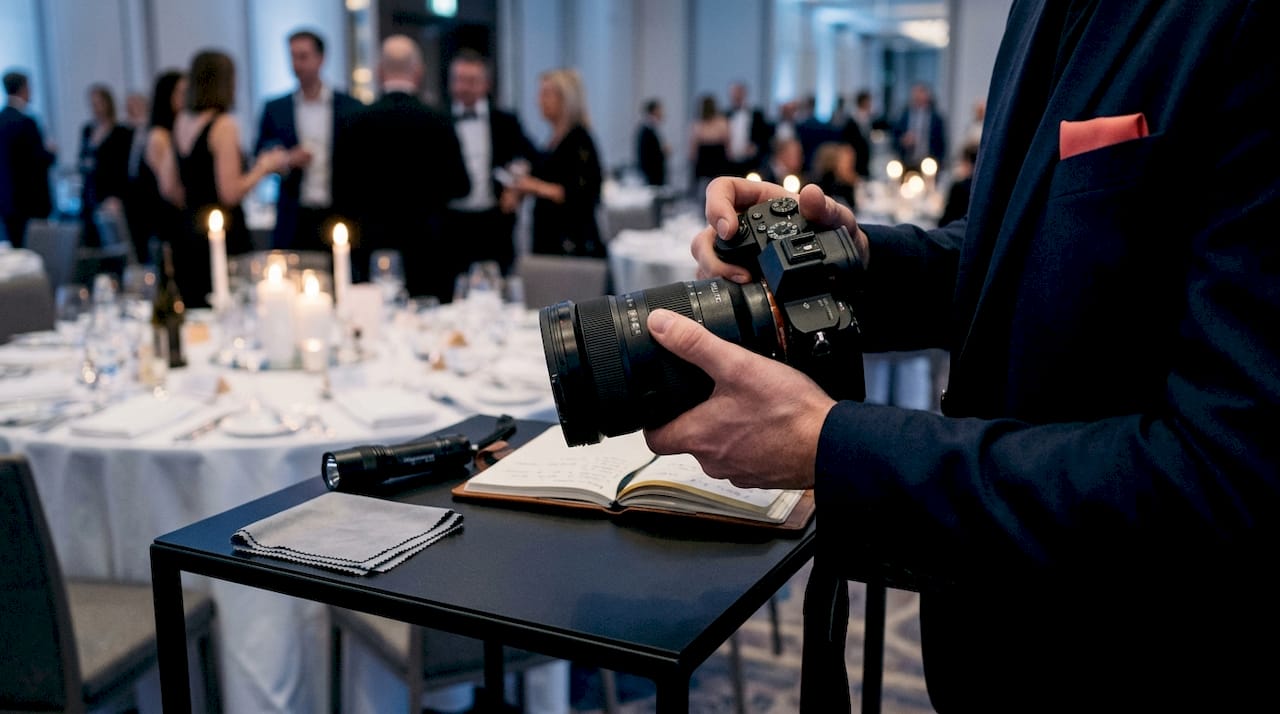
Two-camera setups produce comprehensive coverage without intrusion. One body carries a 24–70mm zoom for room-wide and programme shots. The second carries a 70–200mm telephoto for stage moments and candid networking from across the room. That combination means your photographer never has to interrupt a conversation to get close.
Flash modifiers matter as much as the flash itself. Bounce boards, diffusion domes, and CTO gels soften and warm the light so it blends with the venue’s existing atmosphere. Without them, direct flash flattens faces and signals “corporate snapshot” rather than “professional event photography.”
Gear | Role | Why it matters |
High-ISO camera body | Low-light performance | Keeps images sharp without excessive grain |
24–70mm zoom lens | Room, décor, programme shots | Covers wide to medium range in one lens |
70–200mm telephoto | Stage and candid shots | Captures natural moments from a distance |
Two-body setup | Simultaneous focal lengths | Eliminates lens-swap delays during key moments |
CTO gels and bounce boards | Flash colour and quality | Matches flash to warm venue lighting |
Pro Tip: Ask your photographer to bring a second shooter for galas with more than 150 guests. One person cannot cover arrivals, the dining room, and the stage simultaneously.
How to create an effective gala shot list and event brief
Most organiser mistakes come from ambiguous photographer briefs rather than camera-related errors. A written brief sent at least seven days before the event prevents confusion about timing, priorities, and deliverables. Think of it as your photographer’s roadmap for the night.
A detailed shot list should align coverage directly to your event goals and marketing needs. Sponsor signage, award recipients, and keynote speakers are not optional extras. They are the images your communications team will reach for first on monday morning.
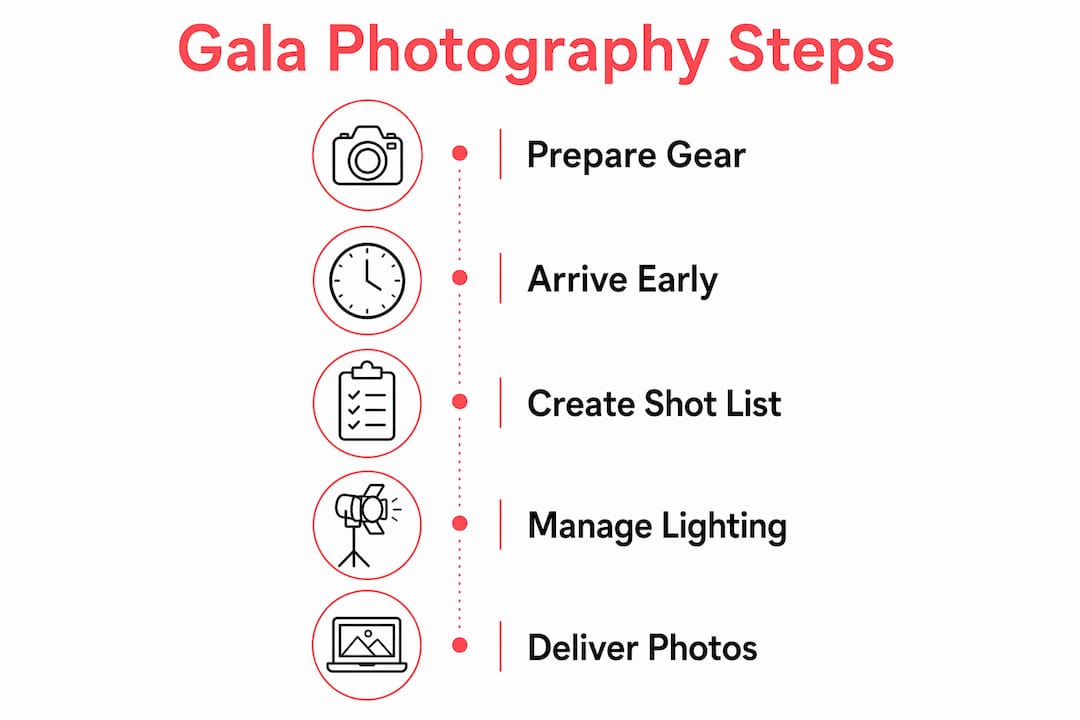
Photographers should arrive at least 90 minutes before doors open to capture venue setup, décor, and room prep. Those setup-phase images carry real storytelling weight. Once guests arrive, the empty-room opportunity disappears permanently.
Your brief should also reflect the full event lifecycle: empty venue, arrivals, cocktail hour, dinner service, programme highlights, and closing energy. Each phase has a different atmosphere and a different audience for the final images.
Shot list essentials to include in your brief:
Venue décor, centrepieces, and branded signage before guests arrive
Red carpet or arrival moments with key guests and VIPs
Sponsor logos and recognition boards in context
Keynote speakers at the podium, with audience reaction shots
Award presentations: one live-action shot and one brief posed portrait after
Candid networking and table conversations
Group portraits of board members, sponsors, or leadership teams
Live entertainment, auction moments, and closing celebrations
Pro Tip: Include your event programme timeline directly in the brief. Your photographer needs to know that the award presentation starts at 7:45 pm, not just that awards are “sometime after dinner.”
What lighting techniques best capture gala dinner ambience?
Ballrooms are lit for atmosphere, not photography. That gap between what looks beautiful to the eye and what a camera sensor captures is the central challenge of gala photography. Chandeliers, candles, and coloured uplighting all create mixed colour temperatures that confuse automatic white balance settings.
Direct on-camera flash disrupts guests and creates flat, harsh images. Bouncing flash off a ceiling or nearby wall spreads the light naturally and reduces hard shadows on faces. The result looks closer to the warm, ambient feel of the room itself.
Colour temperature matching is where most photographers either win or lose the look of the night. Setting camera white balance to Tungsten (approximately 3200K) and gelling the flash with CTO (Colour Temperature Orange) gels prevents the unnatural blue skin tones that appear when flash hits a warm venue. CTB (Colour Temperature Blue) gels serve the opposite purpose in cooler, daylight-balanced spaces.
Lighting technique | Best use case | Trade-off |
Bounced flash (ceiling) | Dining and programme coverage | Requires high ceilings; less effective outdoors |
CTO gel on flash | Warm ballroom and chandelier lighting | Reduces flash output slightly |
CTB gel on flash | Cool, daylight-balanced venues | Rarely needed at evening galas |
Available light only | Intimate candid moments | Requires very high ISO; risk of motion blur |
Dual ambient and flash balance | Formal portraits and award shots | Requires manual exposure skill |
Pro Tip: Ask your photographer to shoot a test frame at the dinner table setup before guests sit down. That one frame confirms the white balance and flash power are dialled in before the room fills.
When and how should photographers deliver gala event photos?
Photo delivery is a marketing decision as much as a logistics one. Full edited galleries are typically delivered within 3–7 working days. Highlight sets can be ready within 24–48 hours. That faster turnaround supports social media sharing and keeps the event momentum alive while guests are still talking about the night.
Same-night delivery takes that further. For events where immediate sharing matters, a structured upload cadence works well. The first batch of 50–100 photos should go up within 90–120 minutes of the event start, followed by rolling uploads every 30–45 minutes. Guests sharing images in real time extends your event’s reach well beyond the room.
Build delivery expectations directly into your photographer brief. Vague language like “photos soon after the event” creates frustration. Specific language creates accountability. Here is a practical delivery structure to include:
Same-night highlights: 50–100 selects uploaded to a shared gallery or social-ready folder within 90 minutes of the event start.
Next-day highlight set: 20–30 polished images ready for social media and press by the following morning.
Full edited gallery: Complete coverage, colour-corrected and culled, delivered within 3–7 working days.
Brand asset selects: Sponsor, signage, and leadership portraits flagged separately for immediate communications use.
Donor recognition images: Live-action and posed portraits from award moments, delivered as a priority subset.
Pair your photography coverage with event video strategies to extend the life of the night’s content across multiple channels.
Key takeaways
Gala dinner photography succeeds when preparation, gear, lighting technique, and clear delivery expectations work together from the first brief to the final gallery.
Point | Details |
Arrive early | Photographers should be on-site 90 minutes before doors open to capture décor and setup. |
Use a two-body setup | Pair a 24–70mm and a 70–200mm lens to cover all moments without switching mid-event. |
Match light with gels | CTO gels on flash and Tungsten white balance prevent blue skin tones in warm venues. |
Send a detailed brief | Include programme timeline, shot list, and delivery deadlines at least seven days in advance. |
Plan delivery in stages | Structure same-night highlights, next-day selects, and a full gallery as separate deliverables. |
What I’ve learned from shooting galas that no brief can teach you
The biggest shift I made as an event photographer was moving from reaction to anticipation. Anticipating moments rather than chasing them is what separates sharp, genuine candid shots from blurry near-misses. I pre-focus on the podium before the speaker walks up. I watch the award recipient’s face before their name is called. That half-second of preparation is everything.
I also learned early that the empty room is one of the most valuable shots of the night. Organizers spend months on décor, florals, and lighting design. Those details deserve their own frames before 300 guests walk in and cover them up. I always build that time into my arrival plan, and clients consistently tell me those setup images are among their favourites.
Working discreetly matters more than most organizers realize. A long lens from the room’s edge captures natural expressions that a photographer hovering at the table never will. I treat the room like a theatre. My job is to document the performance, not become part of it.
The other thing I tell every client: staged portraits and candid moments are not competing priorities. They serve different purposes. The posed group shot goes on the website. The candid laugh between two colleagues goes on LinkedIn and gets shared. You need both, and a good shot list makes room for both.
— Jeff
Gala event photography with Itsjeffb
Planning a gala in Calgary and want coverage that actually gets used after the event? Itsjeffb specialises in corporate event photography built around real moments, key people, and the branded details that matter to your organisation.
[
Every gala engagement includes a customised shot list consultation, expert lighting setup for formal venues, and rapid highlight delivery so your team has images ready for social media the morning after. Whether you need same-night selects or a full edited gallery, the process is clear from the first conversation. Reach out through Itsjeffb’s event photography services to start planning your gala coverage today.
FAQ
What is a gala dinner photography guide?
A gala dinner photography guide is a resource covering gear, lighting, shot lists, and delivery strategies for photographing formal events. It helps event organizers brief photographers and set clear expectations for coverage.
How early should a photographer arrive at a gala event?
Photographers should arrive at least 90 minutes before doors open. That time is used to photograph venue setup, décor, and branded details that disappear once guests arrive.
What lenses work best for gala photography?
A 24–70mm zoom covers room-wide and programme shots, while a 70–200mm telephoto captures stage moments and candid networking from a distance. Using both lenses on separate camera bodies produces the most complete coverage.
How do photographers handle mixed lighting at gala venues?
The standard approach is to set camera white balance to Tungsten (approximately 3200K) and attach CTO gels to the flash. This matches the flash colour to warm venue lighting and prevents unnatural blue skin tones.
How quickly can gala event photos be delivered?
Highlight sets are typically delivered within 24–48 hours. Full edited galleries take 3–7 working days. For same-night sharing, a first batch of 50–100 images can be uploaded within 90–120 minutes of the event start.
Recommended

Comments