Headshot photography terms: industry terminology guide
TL;DR:
Headshot photography terminology emphasizes function, consistency, and readability over artistic expression, crucial for professional results. Using precise language in client briefs and on-set directions builds trust, reduces confusion, and ensures images serve as effective business tools. Mastering these terms enhances communication, improves client relationships, and produces headshots optimized for various platforms and purposes.
Industry terminology in headshot photography is the specialised vocabulary professionals use to describe shot types, lighting setups, composition choices, and client deliverables that separate headshots from every other form of photography. If you have ever sat in a client briefing and heard “catchlight,” “85mm prime,” or “3/4 crop” and nodded along without full confidence, this guide is for you. Knowing these terms precisely changes how you shoot, how you brief clients, and how you deliver work that functions as a genuine career tool. Platforms like LinkedIn and corporate directories demand images that read clearly at thumbnail size, which makes the language of headshot photography more than academic.
What is industry terminology in headshot photography?
The core vocabulary of headshot photography is built around one idea: headshots are professional tools, not artistic portraits. Every term in this lexicon points back to function, consistency, and readability. That is what separates headshot vocabulary from general photography jargon.
The foundational terms you need first

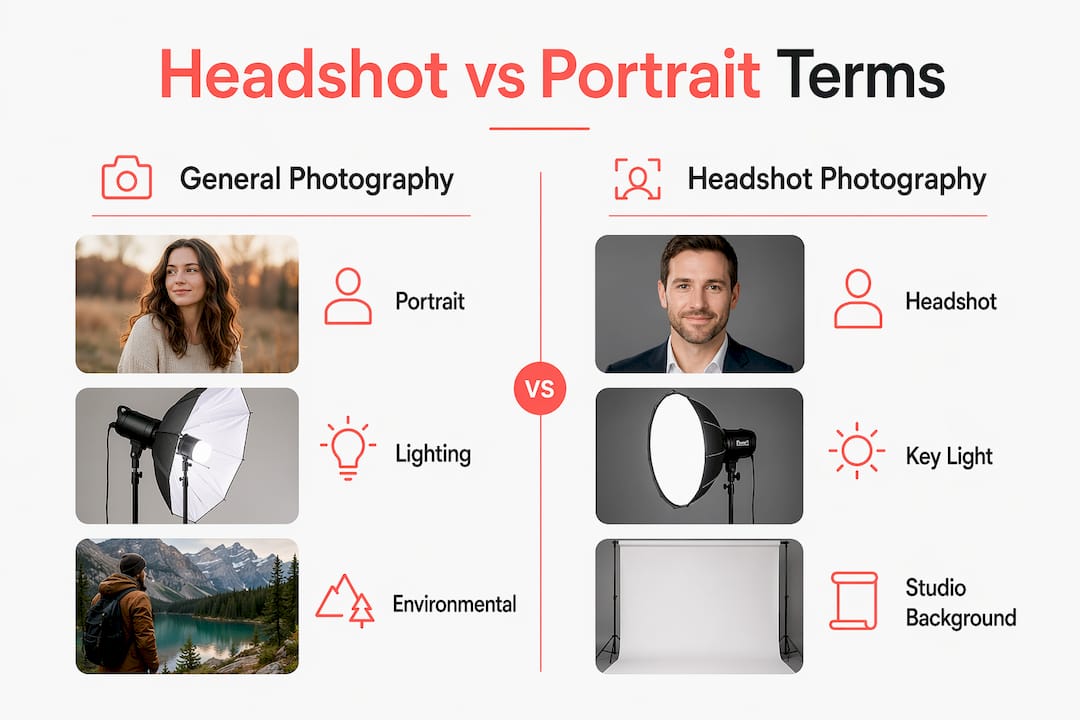
A headshot is defined as a portrait focused on the face and shoulders, produced in a controlled environment with deliberate attention to lighting, composition, and expression. A portrait, by contrast, can include full body, environmental context, or mood-driven storytelling. The distinction matters because it changes every decision you make on set.
Here are the terms that form the bedrock of headshot photography vocabulary:
Close-up: Frames the face from the chin to just above the head. Used for actor headshots and LinkedIn profile images.
Mid-length (or mid-shot): Frames the subject from roughly the waist up. Common in corporate and business headshots.
3/4 shot: Captures the subject from mid-thigh upward. Adds body language to the image without going full-length.
Profile shot: The subject faces sideways. Rarely the primary headshot but useful for variety in a session.
Aperture: The opening in the lens that controls how much light reaches the sensor. A wide aperture (f/1.8 to f/2.8) blurs the background and keeps the face sharp, which is the standard look for professional headshots.
Focal length: The distance between the lens and the sensor, measured in millimetres. Focal lengths between 85mm and 135mm reduce facial distortion and produce the flattering compression that headshots require.
Depth of field: The zone of acceptable sharpness in an image. A shallow depth of field isolates the subject from the background, a technique used in nearly every professional headshot.
Pro Tip: When briefing a new client, send a one-page glossary with the three or four terms you will use most during the session. It removes confusion before it starts and positions you as a professional who communicates clearly.
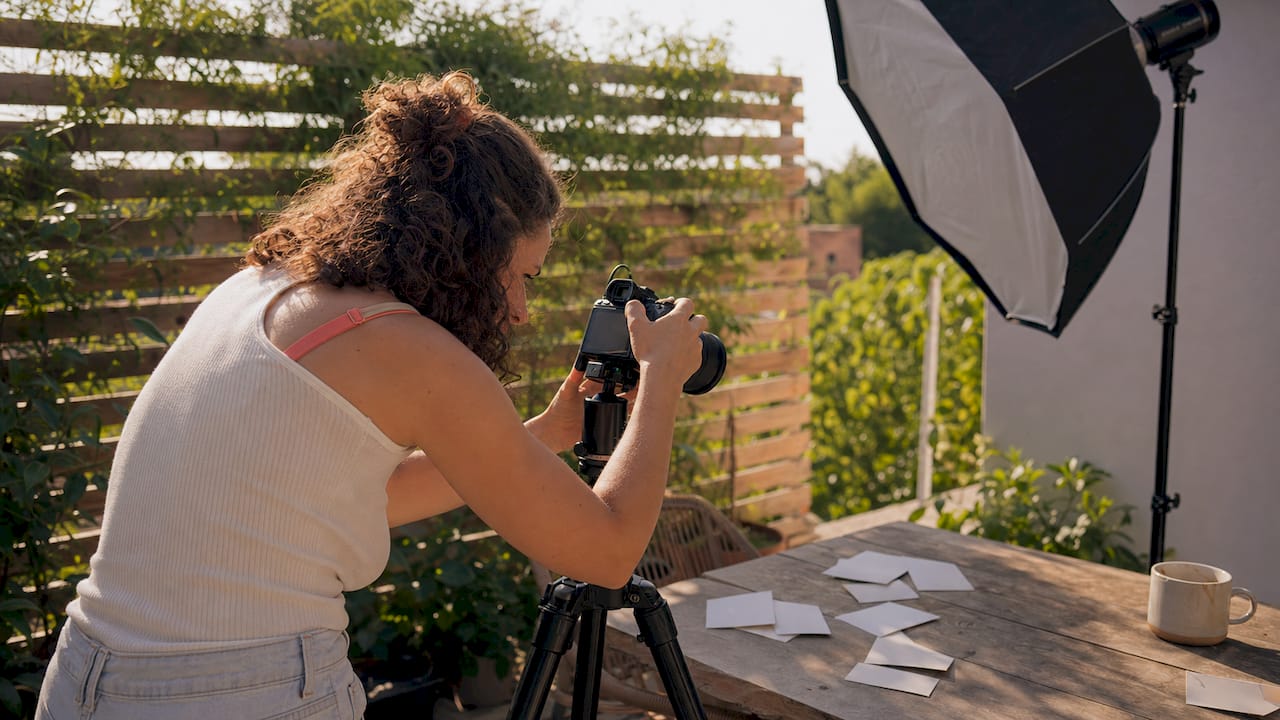
Lighting terms are equally important. The key light is the primary light source that defines the subject’s features. The fill light softens shadows created by the key light. The catchlight is the small, bright reflection visible in the subject’s eyes. Catchlights are a marker of professional lighting because they add life and dimension to the eyes, which is the focal point of every headshot.
How do headshot terms differ from general photography jargon?
General photography vocabulary covers everything from landscape exposure to macro focus stacking. Headshot photography vocabulary is narrower and more purposeful. The terms exist to serve a specific outcome: an image that communicates professionalism and confidence at any size.
Consider the word “lighting.” In landscape photography, lighting describes the quality of natural light at golden hour. In headshot photography, lighting describes a controlled, repeatable setup designed to produce consistent results across an entire team’s directory. The word is the same. The application is completely different.
Term | General Photography Meaning | Headshot Photography Meaning |
Portrait | Any image of a person, artistic or casual | A controlled, professional image focused on face and shoulders |
Environmental portrait | Subject photographed in their natural setting | A specific style contrast to standard headshots; used to tell a story about profession or personality |
Lighting | Natural or artificial light in any context | A deliberate, repeatable setup for consistent professional results |
Background | Any backdrop, natural or constructed | Typically neutral, blurred, or solid to avoid distraction from the subject |
Expression | Any emotional moment captured | A confident, readable expression that functions at thumbnail size |
Environmental portraits use setting as a storytelling element, which is the opposite of what a standard headshot requires. A lawyer photographed in their office with bookshelves in the background is an environmental portrait. The same lawyer photographed against a clean grey backdrop is a headshot. Both are valid. Knowing which term applies tells you which approach to take.
Pro Tip: When a client says they want “something natural,” ask whether they mean an environmental portrait or a relaxed expression in a studio setting. Those are two very different sessions, and the terminology helps you clarify the difference without confusion.
Headshots are tailored for immediate professional function, while portraits focus on mood and artistic expression. That distinction shapes every term in the headshot vocabulary, from how you describe a lighting ratio to how you explain a crop.
What are the most common headshot styles and formats?
Headshot photography is not a single style. The industry recognises several distinct formats, each with its own terminology and purpose.
Corporate or business headshot: Clean background, professional attire, neutral expression that reads as approachable and competent. Used on LinkedIn, company websites, and annual reports.
Actor headshot: Designed to show range and personality. Typically a close crop with expressive lighting. Casting directors use these to assess whether a face fits a role.
Commercial headshot: Targets brand identity or advertising use. Commercial headshots convey a specific professional image without background distractions, and they are built for use in campaigns, packaging, or promotional materials.
Beauty headshot: Focuses on skin, makeup, and facial features. Common in the beauty and fashion industries. Lighting is softer and more flattering than a standard corporate setup.
Format terminology matters just as much as style terminology. Here is how the most common formats break down:
Format | Crop Description | Primary Use |
Close crop | Chin to top of head | Actor headshots, LinkedIn profile photos |
Mid-length | Waist to top of head | Corporate directories, team pages |
3/4 shot | Mid-thigh to top of head | Business branding, speaker profiles |
Full body | Full figure | Event programmes, modelling portfolios |
Understanding headshots for multiple industries means recognising that the same person may need different formats for different platforms. A real estate agent might need a mid-length shot for their website and a close crop for their business card. Knowing the correct term for each format lets you plan the session efficiently and deliver exactly what the client needs.
How to use headshot terminology in sessions and client communication
Clear language is a professional asset. A headshot photography brief outlines session expectations using standard industry terms, covering shot types, lighting styles, and intended image use. A well-written brief reduces back-and-forth, sets accurate expectations, and protects both the photographer and the client.
Here is how to apply terminology at each stage of a headshot session:
Pre-session brief: Specify the style (corporate, actor, commercial), the formats required (close crop, mid-length), and the intended use (LinkedIn, website, print). Use the exact terms so the client understands what they are getting.
On-set direction: Use lighting terms to explain what you are doing. “I am adjusting the fill light to soften the shadows on your left side” is more reassuring than “I am moving that light a bit.” It builds confidence and trust.
Reviewing selects: When presenting final images, use framing terms. “Here is your close crop for LinkedIn and your mid-length for the website” tells the client exactly what they have and where to use it.
Delivering finals: Label files using consistent terminology. “Smith_Corporate_CloseCrop_Final.jpg” is immediately useful. “IMG_4872_edit.jpg” is not.
Consistent terminology builds trust and professionalism in every client interaction. When you speak the language of the industry fluently, clients feel they are in expert hands. That confidence shows up in their expressions, which shows up in the final images.
Pro Tip: Before a team headshot session, send each participant a one-page prep guide that defines the style and format you will be shooting. Use the correct terms. It sets expectations, reduces anxiety, and makes the session run faster for everyone.
Key takeaways
Mastering headshot photography vocabulary is the single most direct way to improve both your images and your client relationships.
Point | Details |
Headshots are professional tools | Every term in headshot vocabulary points to function, consistency, and readability rather than artistic expression. |
Framing terms define deliverables | Close crop, mid-length, and 3/4 shot each serve different platforms and must be specified clearly in every brief. |
Lighting terms build client trust | Using key light, fill light, and catchlight correctly on set reassures clients and produces better expressions. |
Focal length shapes the image | Lenses in the 85mm–135mm range reduce distortion and are the standard for flattering professional headshots. |
Terminology improves communication | A well-written brief using correct industry terms reduces confusion and protects both photographer and client. |
Why terminology is the quiet skill nobody talks about
I have been photographing professionals in Calgary for years, and the single biggest shift in my sessions came when I stopped assuming clients knew what I meant. Early on, I would say “let’s do a tighter shot” and get a blank look in return. Now I say “we are going for a close crop, chin to the top of the frame, which is what works best for your LinkedIn profile.” The client relaxes. They understand the plan. And that relaxation shows up in the image.
The photography community spends a lot of time debating gear and editing software. Very little attention goes to the language we use with clients. That is a missed opportunity. When you can explain the difference between a commercial headshot and an environmental portrait in one sentence, you position yourself as someone who knows exactly what they are doing. Clients do not just hire photographers. They hire confidence and clarity.
There is also a practical side to this. Success in headshot photography is measured by how well the image functions as a business tool, maintaining readability at thumbnail size and consistency across a team’s directory. If you do not understand the terminology behind that standard, you cannot reliably hit it. Knowing your vocabulary is not about sounding impressive. It is about delivering work that actually does its job.
My advice: build a personal glossary of the 20 terms you use most often. Review it before every new client type. The best business headshots come from sessions where everyone in the room speaks the same language.
— Jeff
Ready to put these terms into practice?
Understanding the vocabulary is the first step. Seeing it applied in a real session is where it clicks.
[
At Itsjeffb, every headshot session in Calgary is built around clear communication, consistent results, and images that work hard for your career. Whether you need a solo corporate headshot, a full team shoot at your office, or commercial branding imagery, the process is guided and straightforward from start to finish. You will know exactly what you are getting before the camera ever comes out. Explore headshot packages and pricing to find the right fit, or check out team headshot options if you are looking to update your entire organisation at once.
FAQ
What is a headshot in photography?
A headshot is a portrait focused primarily on a person’s face and shoulders, produced in a controlled environment for professional use such as LinkedIn profiles, business websites, or acting portfolios. It is designed for function and readability rather than artistic expression.
What focal length is best for headshots?
The standard focal length for headshots is 85mm–135mm. Lenses in this range reduce facial distortion and create the background separation that gives professional headshots their clean, polished look.
What is the difference between a headshot and a portrait?
A headshot is a professional tool designed for immediate business use, prioritising a confident expression and clean composition. A portrait focuses on mood, storytelling, and artistic intent, and may include environmental context or full-body framing.
What does catchlight mean in headshot photography?
A catchlight is the small, bright reflection of a light source visible in the subject’s eyes. It is a sign of professional lighting and adds life and dimension to the eyes, which are the focal point of every headshot.
What is a commercial headshot?
A commercial headshot is designed for brand identity or advertising use, conveying a specific professional image without background distractions. It differs from a standard corporate headshot in that it is built for campaigns, promotional materials, or product packaging rather than a company directory.
Recommended


Comments