Organizational portrait session guide for HR teams
TL;DR:
An organizational portrait session is a coordinated photoshoot capturing consistent headshots to enhance brand cohesion. Proper preparation, scheduling, and post-session editing are crucial for delivering professional, on-brand images that reflect your team confidently. Effective management ensures the investment maintains long-term visual consistency and credibility.
An organizational portrait session is a structured, coordinated photography event where a professional photographer captures consistent headshots or group portraits of an entire workforce, department, or leadership team. Done well, it becomes one of the most visible investments in your company’s brand. Done poorly, it produces a patchwork of mismatched images that quietly undermine your credibility on LinkedIn, your website, and every piece of marketing material your team touches. This guide walks you through every phase of planning and executing a session that delivers polished, on-brand results your people will actually be proud to use.
What does an organizational portrait session guide actually cover?
An organizational portrait session, known in the industry as a corporate headshot day, is the process of photographing every member of a team under consistent lighting, backdrop, and styling conditions. The goal is brand cohesion. Every person on your website or company directory should look like they belong to the same professional family, not like they were photographed in five different decades by five different people.
The scope varies widely. A small professional services firm might book a half-day for twelve people. A mid-size company might need a full day across two departments. Team headshot days typically cost between $150 and $400 per person for groups, with individual sessions ranging from $250 to $600 depending on market. Larger groups generally benefit from reduced per-person rates, so the economics of a coordinated session make strong sense for teams of ten or more.
One distinction worth making early: corporate headshots and executive portraits are not the same thing. Treating both identically can compromise either the authority of your leadership imagery or the cohesion of your broader team photos. Executives often warrant a slightly longer session, more varied setups, and additional retouching. Plan for that difference from the start.
What do you need before booking a session?
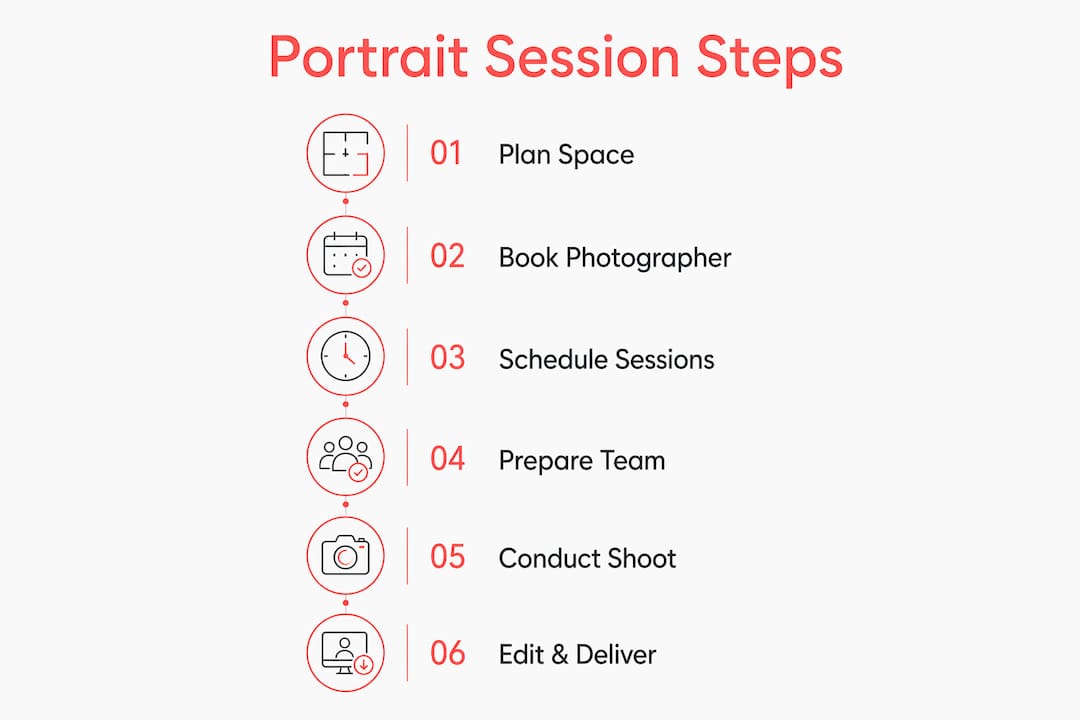
Preparation is where most corporate portrait sessions are won or lost. Before you even contact a photographer, you need to assess your space, your team size, and your brand requirements.

Space and infrastructure
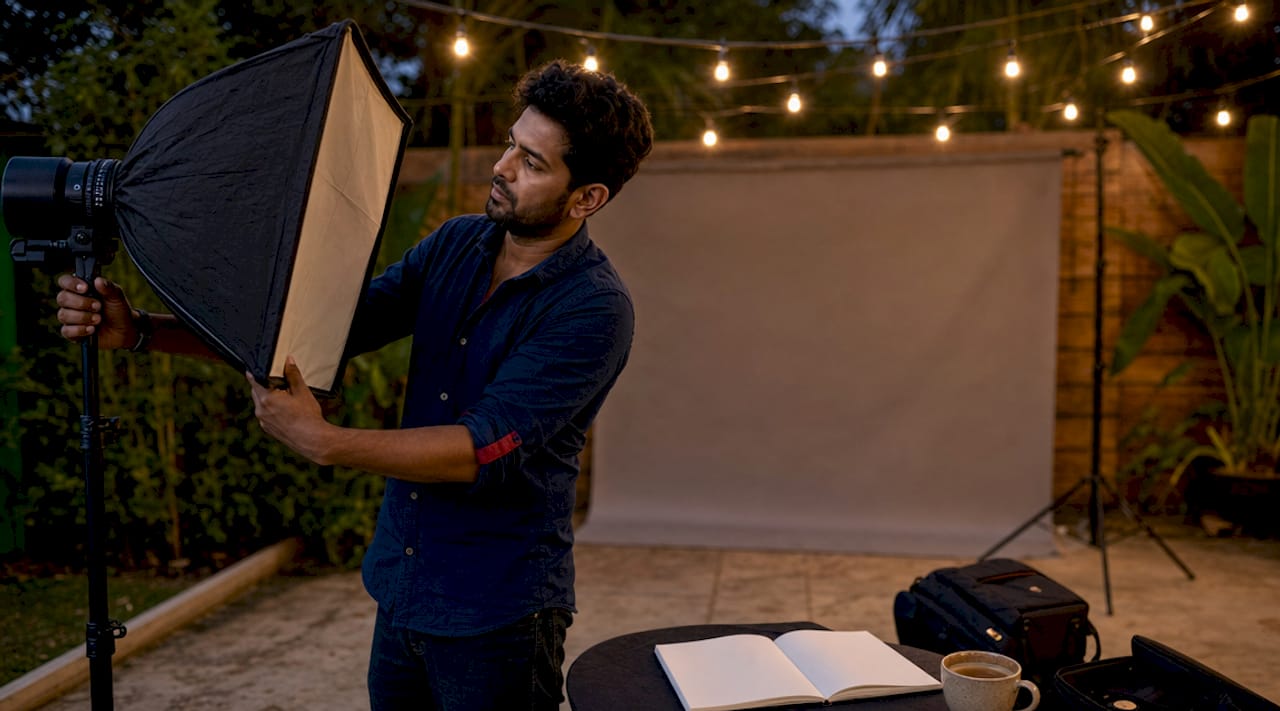
On-site sessions require a minimum space of 8x10 to 10x12 feet with accessible power outlets. That is the only mandatory infrastructure for a mobile studio setup. A boardroom, a large office, or a cleared reception area all work well. Natural light is a bonus but not a requirement. A good photographer brings their own lighting.
Choosing the right photographer
Look for a photographer who specialises in corporate headshots, not one who primarily shoots weddings or events and offers headshots as a side service. Ask to see a full team gallery, not just individual hero shots. Consistency across a group of twenty people is a very different skill than producing one stunning portrait. Check turnaround times, retouching standards, and whether they offer on-site coordination or just show up with a camera.
Scheduling and throughput
Corporate headshot sessions allocate roughly 15 minutes per person, including wardrobe checks and posing direction. Use that number to build your schedule. A team of thirty people needs approximately seven and a half hours of shooting time, which means either a full day or splitting across two sessions. Build in buffer time for late arrivals and setup transitions.
Team size | Estimated session time | Recommended format |
5 to 15 people | 2 to 4 hours | Half-day on-site |
16 to 30 people | 4 to 7 hours | Full-day on-site |
31 to 60 people | 2 days or split sessions | Multi-day on-site |
60+ people | Phased by department | Scheduled blocks over weeks |
Pro Tip: Scheduling employees in short blocks grouped by department minimises workflow disruptions and keeps the session moving. Group accounting together, then sales, then leadership. It reduces the number of people waiting and keeps each team’s energy consistent.
How do you prepare your team before the session?
Team preparation is the single biggest variable in photo quality. A well-prepared group produces images that look polished and cohesive. An unprepared group produces images that require heavy retouching and still look inconsistent.
Sending a pre-shoot preparation guide at least one week before the session reduces day-of anxiety and measurably improves photo quality. The guide should cover wardrobe, grooming, and what to expect on the day. Keep it short, visual where possible, and direct. People do not read long PDFs.
Wardrobe guidance that actually works
Wardrobe guidelines recommend dressing one level above daily attire with solid, neutral colours. Avoid pure black, white, and bold patterns, as these create photographic problems including blown highlights and visual distraction. Navy, slate grey, burgundy, and forest green all photograph beautifully. Proper attire choices can keep images usable for three to five years, which is a meaningful return on a single session investment.
Encourage employees to bring two or three outfit options on the day. Inspecting wardrobe choices upon arrival prevents on-the-day mismatches and gives you a chance to redirect anyone who has arrived in a bold stripe or a white shirt that will blow out under studio lighting.
Grooming and expression coaching
Haircuts should be scheduled at least a week before the session, not the day before. Fresh cuts can look slightly unnatural in photos. For those who wear makeup, natural and matte finishes photograph best. Trimmed facial hair and clean nails matter more than people expect, because cameras notice everything.
Expression coaching is often overlooked and it is one of the most valuable things a skilled photographer brings to the session. Most professionals need coaching to achieve authentic smiles that involve eye contraction. A forced mouth-only smile reads as insincere in photos. A good photographer will guide each person through a brief warm-up before the shutter fires.
Send a preparation guide at least seven days before the session
Specify solid, neutral colours and one level above daily dress
Recommend haircuts no later than five to seven days prior
Ask employees to bring two to three outfit options
Brief your team on what posing direction will feel like so it is not a surprise
How do you run the session on the day?
Execution is where your preparation either pays off or falls apart. Arrive early. The photographer should be set up and ready to shoot before the first employee walks in. A rushed setup creates inconsistent lighting and a frantic energy that transfers directly into the photos.
Set up the mobile studio at least 45 minutes before the first appointment. Test the lighting on a stand-in subject and make any adjustments before the session begins.
Run a tight appointment schedule. Each person should know their time slot in advance. A coordinator at the door keeps the flow moving and handles any last-minute wardrobe questions before people step in front of the camera.
Direct each individual through posture, angle, and expression. Do not assume people know how to stand or where to look. A brief, friendly direction (“chin slightly forward and down, shoulders back, now give me a real laugh”) produces dramatically better results than asking someone to “just look natural.”
Offer on-site image selection where possible. On-site image selection accelerates workflow for large teams by allowing immediate photo choice and quick retouch prioritisation. An assistant can coordinate image review while the photographer continues shooting the next person.
Document no-shows immediately. Keep a running list of anyone who misses their slot. Schedule a makeup session within two weeks while the lighting setup is still fresh in the photographer’s notes.
Pro Tip: Place a small mirror near the shooting area so employees can do a quick self-check before stepping in front of the camera. It takes ten seconds and eliminates a surprising number of collar, hair, and lipstick issues.
What happens after the session: editing, delivery, and consistency?
Post-session workflow determines whether your investment holds up over time. The editing standard matters as much as the photography itself.
Professional retouching removes temporary blemishes and stray hairs but preserves permanent features like wrinkles and freckles for authentic representation. Over-retouching produces images that look artificial and date quickly. The goal is to look like the best version of yourself on a great day, not like a different person entirely.
Delivery timelines for professionally retouched corporate headshots typically run 24 to 48 hours for on-site sessions with a streamlined workflow. You should receive both high-resolution files for print and web-optimised versions for digital use. Confirm these formats before the session, not after.
High-resolution files: minimum 2000 pixels on the longest edge for print use
Web-optimised files: compressed JPEGs under 500KB for fast website loading
File naming conventions: use employee names and dates for easy catalogue management
Delivery format: a shared cloud folder (Google Drive, Dropbox, or WeTransfer) works well for large teams
Maintaining exact documentation of lighting setups, camera settings, and backdrops is the key to long-term consistency. When a new hire joins six months later, you want their headshot to match the rest of the team seamlessly. Ask your photographer to provide a setup sheet after every session and store it with your HR records.
Consistency factor | Why it matters |
Lighting documentation | Matches new hire photos to existing team images |
Backdrop and colour notes | Prevents visual inconsistency in team directories |
Retouching style guide | Keeps editing tone consistent across photographers |
Scheduled update cycles | Prevents outdated photos from undermining brand credibility |
What are the most common challenges and how do you handle them?
Even well-planned sessions hit snags. Knowing what to expect means you can solve problems in minutes rather than losing hours.
Last-minute cancellations: Build a waitlist of employees who can fill open slots on short notice. A cancellation at 9am does not have to mean a gap in your schedule.
Wardrobe inconsistencies on the day: Keep a small kit of neutral accessories, a lint roller, and a steamer on hand. A wrinkled collar or a distracting necklace can be addressed in under two minutes.
Employee nervousness: This is more common than most HR professionals expect. A warm, unhurried photographer makes an enormous difference. Brief your team in advance that posing direction is normal and that multiple shots will be taken. Removing the pressure of “getting it right on the first try” visibly relaxes people.
Lighting drift and technical issues: Studio lighting can shift if equipment is moved or if the session runs across different times of day near windows. Your photographer should check and recalibrate lighting every thirty to forty-five minutes.
“The best corporate portrait sessions feel less like a photo shoot and more like a well-run meeting. When people know what to expect and feel respected in the process, the images show it.”
Key takeaways
A successful organizational portrait session requires coordinated preparation, consistent execution, and a clear post-session workflow to protect your brand investment over time.
Point | Details |
Plan space and schedule early | Book a minimum 8x10 foot space and allocate 15 minutes per person for accurate scheduling. |
Send preparation guides in advance | Distribute wardrobe and grooming guidance at least one week before the session. |
Coach expressions on the day | Authentic smiles require direction; brief each person before they step in front of the camera. |
Document your setup | Record lighting, backdrop, and camera settings so new hire photos match existing team images. |
Distinguish headshots from executive portraits | Treat leadership photography as a separate scope to protect both authority and brand cohesion. |
What I have learned from running corporate portrait sessions
After photographing teams across Calgary, the pattern I see most often is this: the companies that get the best results are not the ones with the biggest budgets. They are the ones where someone in HR or leadership took the preparation seriously. They sent the guide. They confirmed the space. They briefed their team. And when people walked in, they were calm and ready.
The companies that struggle are usually the ones who treat the session as a logistical afterthought. They book a photographer, send a calendar invite, and assume the rest will sort itself out. It rarely does. You end up with half the team in black shirts, three people who missed their slot, and a handful of images that look like they were taken at a job fair.
One thing I genuinely believe: the photographer’s job is to make people look like themselves on a confident day. Not to manufacture something artificial. The best headshots are the ones where the person looks at the image and says “yes, that is actually me.” That only happens when the environment is relaxed, the direction is clear, and the preparation has been done. Choosing a photographer who understands corporate culture, not just camera settings, is the difference between a session that delivers and one that disappoints.
— Jeff
Ready to book your team’s portrait session in Calgary?
If you are organising a corporate portrait session for your team and want consistent, professional results without the logistical headache, Itsjeffb makes the process straightforward from start to finish.
[
Jeff B Photography offers on-site team headshot sessions across Calgary with efficient scheduling, consistent lighting setups, and fast turnaround. Whether you are photographing a team of eight or eighty, the process is built to fit around your workday with minimal disruption. Every session includes posing direction, wardrobe guidance on the day, and professionally retouched images delivered in both print and web formats. View session pricing and packages to find the right fit for your team size and timeline. Let’s get your team looking their best.
FAQ
What is an organizational portrait session?
An organizational portrait session is a coordinated photography event where a professional photographer captures consistent headshots or group portraits of an entire team or company. The goal is brand cohesion across all professional platforms, including websites, LinkedIn, and marketing materials.
How long does a corporate headshot session take per person?
Corporate headshot sessions typically allocate approximately 15 minutes per person, including wardrobe checks and posing direction. For a team of twenty, plan for a full half-day to allow for setup, transitions, and buffer time.
What should employees wear for a team headshot day?
Employees should dress one level above their daily attire in solid, neutral colours. Avoid pure black, white, and bold patterns, as these create photographic issues. Proper wardrobe choices can keep images usable for three to five years.
How do you maintain consistency when new hires join later?
Ask your photographer to document the exact lighting setup, backdrop, and camera settings from the original session. This setup sheet allows future new hire sessions to match the existing team photos closely, protecting your brand’s visual consistency over time.
How much does a team headshot day cost?
Group headshot sessions typically cost between $150 and $400 per person, with pricing scaling down for larger teams. Individual sessions range from $250 to $600 depending on the market and photographer’s scope of service.
Recommended
Comments