
The role of authentic photography in brand trust
- Jeff Borchert
- Jun 14
- 8 min read
TL;DR:
Authentic photography captures real moments and genuine emotions, building trust and emotional bonds for brands. It emphasizes presence, context, and natural expressions over staged or AI-generated images, which are less trustworthy and less memorable. Investing in real imagery creates a long-term asset that enhances credibility, conversions, and authentic storytelling.
Authentic photography is defined as the practice of capturing real, unmanufactured moments that reflect genuine human emotion and truthful scenes. The role of authentic photography in brand storytelling and personal narrative has never been more critical. As AI-generated imagery floods every platform, the ability to show something real has become a competitive advantage. Research from the Emulent Agency, Fstoppers, and behavioural science studies all point to the same conclusion: genuine images build trust, drive conversions, and create emotional bonds that polished or synthetic visuals simply cannot replicate.
What does authentic photography actually mean?
Authentic photography is not simply “candid” or “unposed.” The industry term is documentary photography when applied to events and brand storytelling, and it describes a structural commitment to capturing moments as they genuinely unfold. The difference between authentic and staged imagery is not always visible at first glance. It lives in the feeling a photo creates.
Staged photography is built around a predetermined outcome. A subject is placed, lit, and directed to project a specific image. Authentic photography, by contrast, requires the photographer to anticipate and respond to what is actually happening. That skill involves empathy, patience, and timing. No AI prompt can replicate it.
AI-generated images present a different challenge entirely. They can look technically flawless. But they are constructed from statistical patterns, not lived experience. Photography records real light and human atmosphere as it existed in a specific moment. That is something a generated image will never do, regardless of how convincing it appears.
Here is where a common misconception surfaces. Many people assume authentic photography means lower quality or less flattering results. That is not accurate. Photojournalists have long understood that truthful emotion over prettiness communicates more powerfully than a perfectly composed but hollow image. The goal is not to look good. The goal is to feel true.
Key characteristics that separate authentic photography from manufactured imagery:
Presence over perfection. The photographer is observing and waiting, not directing and staging.
Contextual detail. Real environments, real expressions, and real interactions tell a fuller story.
Emotional specificity. Genuine moments carry micro-expressions and body language that staged photos cannot reproduce.
Intentional attention. Slowing down and observing context produces richer, more truthful records than rapid-fire shooting.
Pro Tip: When reviewing a photographer’s portfolio, look for images where the subjects are not looking at the camera. Those moments reveal whether the photographer can capture life as it happens, not just as it is posed.
How does authentic photography influence trust and conversions?
The impact of authentic images on consumer behaviour is measurable and significant. 98% of consumers consider authentic images pivotal to trusting a brand. That is not a soft preference. It is a purchasing signal.

The conversion data is equally direct. Product pages featuring customer-captured photos see a 74% increase in conversions, and replacing stock photography with genuine imagery lifts conversions by 35%. These numbers reflect a straightforward truth: people buy from brands they believe are real.
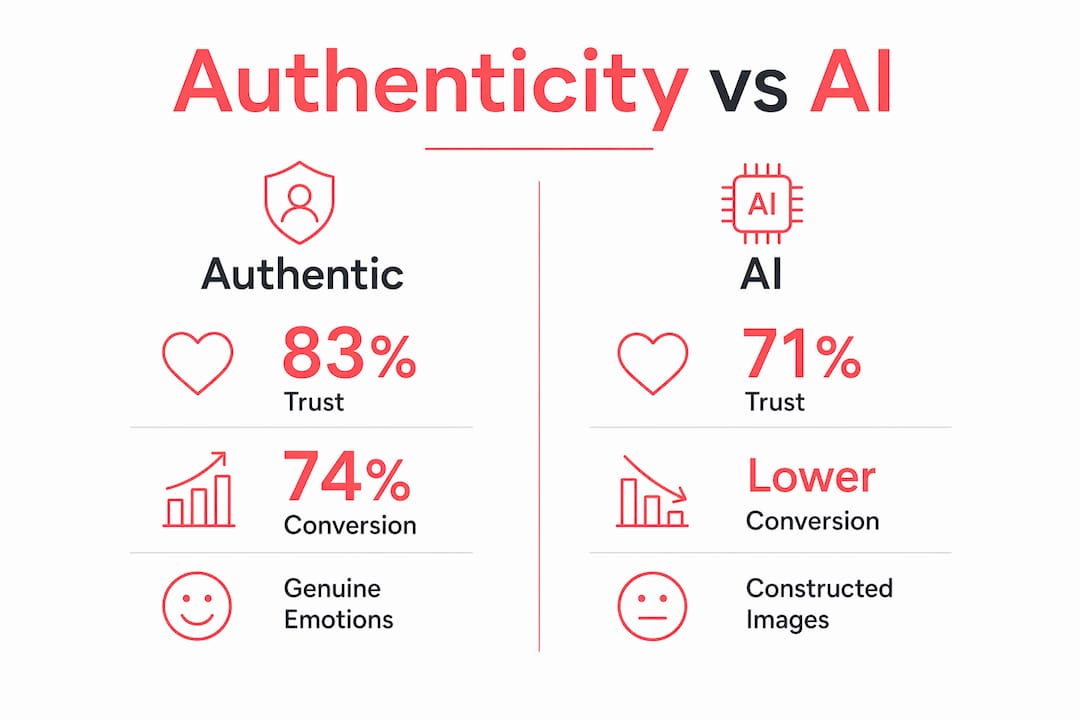
The trust gap between human creators and AI-generated content reinforces this. Real creators hold an 83% brand trust score compared to 71% for AI-generated images. That 18-point advantage is not trivial. It represents the difference between a viewer who feels connected and one who remains sceptical.
Metric | Authentic / Human Photography | AI-Generated Imagery |
Consumer trust score | 83% | 71% |
Conversion lift (product pages) | Up to 74% | Not documented |
Consumer purchase intention | High | Reduced when AI label is disclosed |
Emotional connection | Strong, lasting | Shallow, transactional |
The emotional dimension matters beyond conversions. Authentic moments build the kind of connection that keeps clients coming back. A genuine photo of your team at work, a real expression from a satisfied customer, or an unscripted moment from a company event tells a story that no stock image library can replicate. For businesses, photography shapes your online reputation in ways that compound over time.
How can businesses and individuals apply authentic photography?
The benefits of true photography are only realised when you approach it with intention. Here is how to put it into practice, whether you are building a personal brand or representing an organisation.
Choose a photographer who prioritises presence. The right photographer is not just technically skilled. They are observant, patient, and able to make subjects feel at ease. Comfort produces genuine expressions. Tension produces stiff, forgettable images.
Brief for moments, not just looks. Tell your photographer what actually happens during your events, your team’s daily work, or your client interactions. The best images come from understanding the story, not just the shot list.
Use real environments. Shooting in your actual office, at your real events, or in the spaces where your brand lives adds contextual truth that a studio backdrop cannot provide. Authentic branded photography performs better precisely because it reflects a real world the viewer can recognise.
Resist the urge to over-direct. Give subjects a general direction, then step back. The moment they stop thinking about the camera is the moment the real photo happens.
Edit to preserve, not to transform. Colour grading, light adjustments, and clean retouching are all appropriate. Liquify tools, heavy skin smoothing, and composite backgrounds move images away from truth and toward fiction.
Invest in professional headshots that feel like you. A professional portrait does not have to look stiff or corporate. The best headshots capture personality and confidence together, which is what clients and colleagues actually respond to.
Pro Tip: For team headshots, brief everyone in advance on what to wear and what to expect. Consistency in preparation leads to consistency in results, and consistent results across a team create a cohesive, trustworthy brand impression.
For personal milestones, the same principles apply. Family portraits and children’s photography that prioritise connection over perfection produce images people actually display and share. A child mid-laugh is worth ten posed smiles.
What challenges come with authentic photography in the AI era?
The importance of genuine photography is growing precisely because it is becoming harder to guarantee. Audiences are more sophisticated than ever, and they are actively looking for signs of manipulation.
Viewers actively search for image anomalies when consuming AI-generated video and photography. Perceived authenticity drives how people look at and engage with images, often more than actual authenticity does. This means that even a real photo can lose credibility if it feels manufactured.
The trust gap between human and AI content is also narrowing. Real creators currently hold an 18-point advantage, but that gap may narrow to 8% by the end of 2026. The window for differentiation through genuine imagery is open now. Businesses that build a library of authentic visual content today are establishing trust before the gap closes further.
There are also ethical dimensions worth considering:
Transparency matters. Labelling AI-generated images as such reduces purchase intentions and perceived authenticity, particularly for premium products. Audiences are not forgiving when they feel deceived.
Manufactured candidness is its own problem. Staged “candid” shots, where subjects are directed to look like they are not being photographed, erode trust when audiences recognise the formula. Consumer sophistication demands real transparency, not the performance of it.
Authentic photography is a long-term asset. A library of real images from your events, team, and daily operations is something no competitor can copy. It is yours, and it is true.
The role of candid photography in corporate branding is particularly undervalued. A genuine moment from a team meeting or a client event communicates culture in a way that a posed group photo never will. That culture is what attracts talent, clients, and partners.
Key takeaways
Authentic photography builds measurable trust and emotional connection because it captures real moments that neither staged nor AI-generated imagery can replicate.
Point | Details |
Authenticity drives conversions | Product pages with genuine images see up to a 74% conversion lift over stock photography. |
Human creators hold a trust advantage | Real photographers score 83% on brand trust versus 71% for AI-generated content. |
Editing should preserve, not transform | Light retouching maintains authenticity; heavy manipulation moves images toward fiction. |
Presence is a photographer’s core skill | Anticipation, empathy, and timing produce genuine moments that staged direction cannot replicate. |
Authentic imagery is a long-term brand asset | A real visual library of your team and events is unique to you and compounds in credibility over time. |
Why i think authentic photography will only get more valuable
I have been photographing Calgary businesses, teams, and events long enough to see a clear pattern. The images that get used, shared, and remembered are almost never the perfectly posed ones. They are the moment someone laughed unexpectedly, the handshake that sealed something real, the team gathered around a table actually talking.
What I find most interesting right now is the pressure AI is putting on authenticity. You would think that better AI images would make real photography less valuable. I think the opposite is happening. As synthetic imagery becomes easier to produce, audiences are getting sharper at detecting it. The role of professional photography for brands is shifting from “nice to have” to a genuine trust signal.
The skill I rely on most is not technical. It is the ability to make someone forget the camera is there. That takes time, conversation, and genuine interest in the person in front of you. No prompt produces that. The market is starting to recognise it, and I think businesses that invest in real imagery now are making a very smart long-term decision.
— Jeff
Ready to put authentic photography to work for your brand?
At Itsjeffb, every session is built around capturing something real. Whether you need corporate headshots that actually look like you, event coverage that documents the energy in the room, or branding imagery that tells your company’s story honestly, the approach is always the same: show up, observe, and capture what is true.
[
Calgary businesses and individuals can explore session options and pricing to find the right fit. If your team needs consistent, professional headshots that build a cohesive brand presence, team headshot sessions are designed to be efficient, comfortable, and genuinely useful. Let’s make sure your visual story is one you are proud to tell.
FAQ
What is authentic photography in simple terms?
Authentic photography captures real moments and genuine emotions as they naturally occur, without staging or manufacturing the scene. The industry also refers to this as documentary photography when applied to events and brand storytelling.
How does authentic photography influence brand trust?
98% of consumers say authentic images are pivotal to trusting a brand, and genuine imagery lifts product page conversions by up to 74% compared to stock photography.
Is ai-generated photography as trustworthy as real photography?
Real human creators currently hold an 83% brand trust score versus 71% for AI-generated images. Labelling content as AI-generated also reduces consumer purchase intentions, particularly for premium products.
What makes a headshot or brand photo feel authentic?
Authentic portraits capture personality and natural expression rather than a rigid pose. The best results come from photographers who prioritise making subjects comfortable so genuine moments can emerge naturally.
Can businesses use authentic photography for corporate websites?
Absolutely. Genuine imagery on corporate websites builds credibility in client-driven industries by showing real people, real environments, and real culture rather than generic stock visuals.
Recommended


Comments