What is branded detail photography: a 2026 guide
TL;DR:
Branded detail photography uses close-up images to showcase product textures, logos, and specific features that communicate quality. It plays a vital role in building trust, differentiating products, and reinforcing brand identity across multiple marketing channels. Consistent, technically precise detail shots become powerful assets that enhance perception, increase engagement, and improve sales performance.
Branded detail photography is defined as the intentional use of close-up images to highlight specific product features, textures, logos, and branded elements that communicate quality and reinforce visual identity. Known in professional practice as macro or detail product photography, this specialised discipline gives customers a virtual tactile experience of products they cannot physically touch. Tools like macro lenses, focus stacking, and controlled lighting are central to the craft. For businesses and marketing professionals, understanding what is branded detail photography means recognising it not as decoration, but as a trust-building asset that directly influences purchase decisions and brand perception across every platform you use.
What is branded detail photography and how does it differ from other product shots?
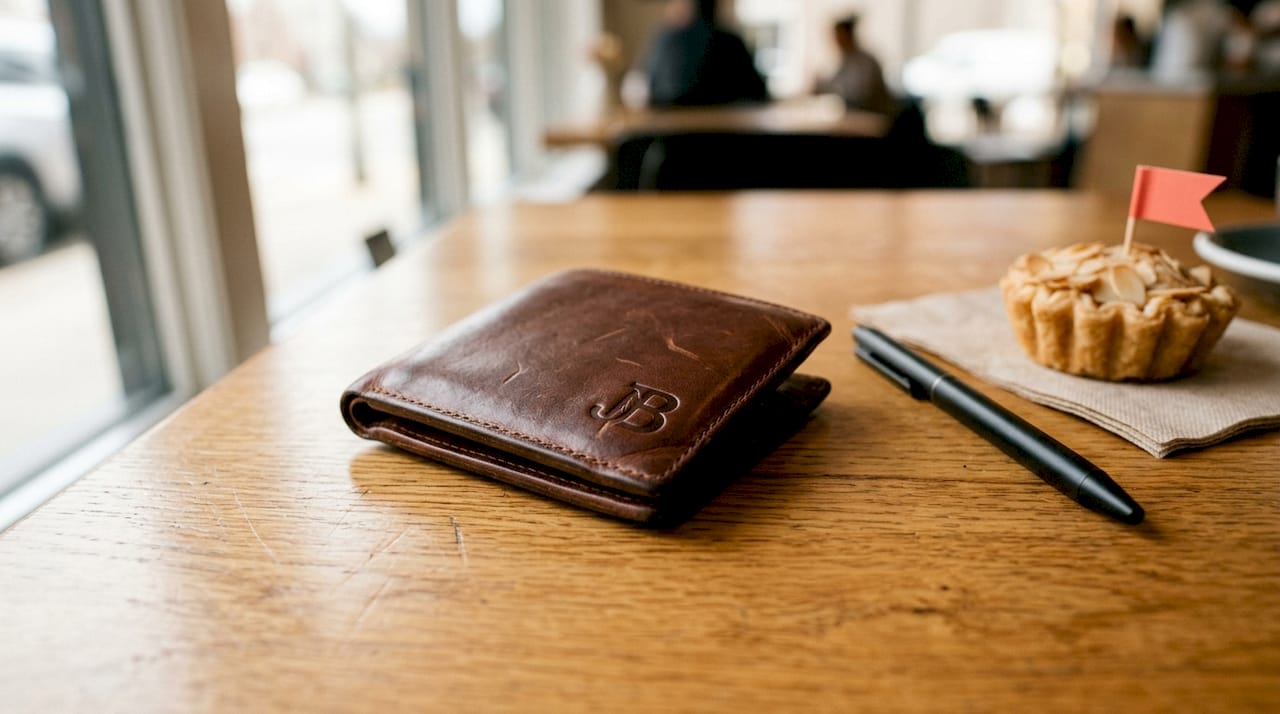
Branded detail photography is not the same as a standard product shot, and that distinction matters enormously for your marketing strategy. A hero image shows the whole product in its best light. A lifestyle image places it in context. A detail shot does something different entirely: it moves in close to reveal the stitching on a leather wallet, the embossed logo on a perfume bottle, or the matte finish on a premium skincare cap. These are the images that answer the question a shopper silently asks: “Is this actually as good as it looks?”
The functional role of detail images sits at a specific point in the product image hierarchy, particularly on product detail pages. Detail images on product pages show aspects not fully visible in main images, which directly enhances a customer’s understanding of what they are buying. This is not a minor benefit. It is the difference between a shopper who bounces and one who adds to cart.
Image type | Primary purpose | What it shows |
Hero shot | First impression, full product | Overall form, colour, scale |
Lifestyle image | Emotional context, aspiration | Product in use or environment |
Branded detail shot | Trust, quality proof, brand signals | Textures, logos, finishes, materials |
Packaging detail | Brand identity, unboxing experience | Labels, typography, surface quality |
Detail shots support premium positioning in a way no other image type can replicate. When a shopper sees a crisp close-up of hand-stitched seams or a precisely embossed logo, they are receiving a quality signal that justifies a higher price point without a single word of copy. That is the quiet power of branded detail photography explained through results rather than theory.
Why branded detail photography builds trust and brand identity
Custom branded photography assets outperform stock images at every level of brand recognition and customer trust. Marketing leadership consistently notes that stock images dilute brand identity because they are, by definition, shared with competitors. A detail shot of your specific product, your exact finish, your actual logo cannot be replicated by anyone else. That uniqueness is a brand asset.
The importance of detail photography becomes clearest when you think about visual storytelling across channels. A single well-executed close-up of your product’s texture can carry the same message on your website, in a paid ad on Meta, in an email campaign, and on a printed catalogue. Detail shots function as brand signals across multiple marketing platforms when they maintain consistent lighting, styling, and framing. Consistency is what transforms individual images into a cohesive visual language.
Here is what branded detail photography does for your brand identity specifically:
Communicates craftsmanship without requiring descriptive copy to do the heavy lifting
Differentiates your product from visually similar competitors at a glance
Builds credibility by showing rather than claiming quality
Reinforces brand colours, typography, and finishes as visual touchpoints across every channel
Reduces purchase uncertainty, which directly lowers return rates
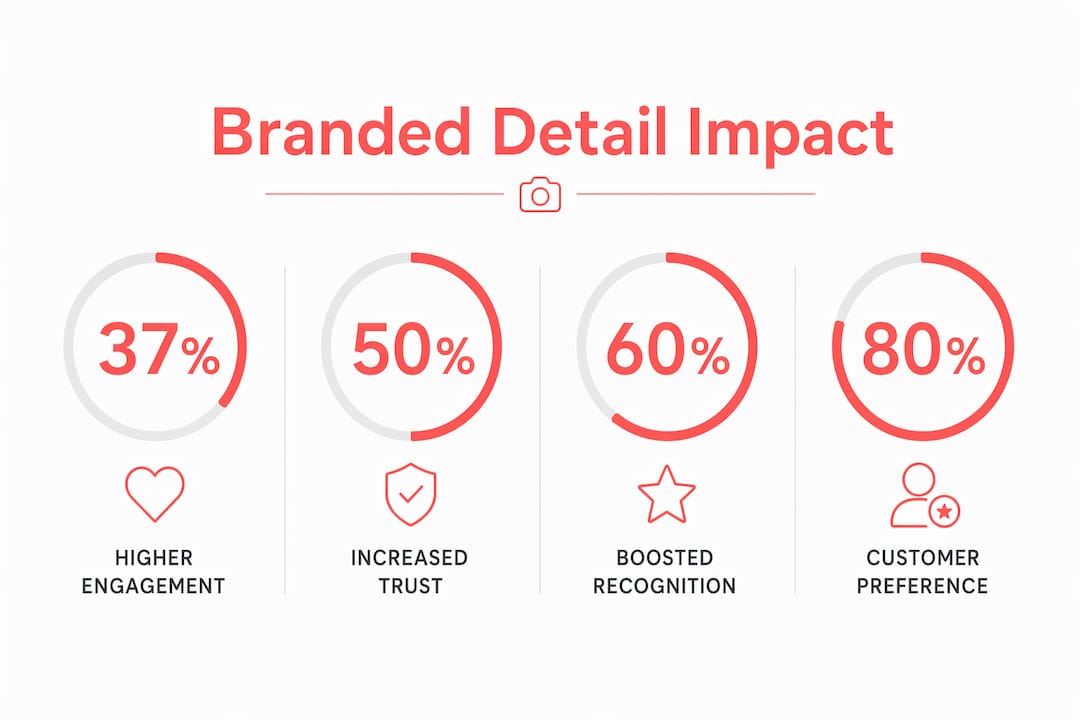
Branded detail photos with clear logos and textures show a 37% higher engagement rate in analytics studies. That number reflects something real: shoppers respond to images that let them inspect a product the way they would in a physical store.
Pro Tip: When planning a branded detail shoot, pull your brand style guide before you pick up a camera. Every colour, finish, and material choice in your detail shots should map directly to your brand standards document. This is how you turn individual images into a recognisable visual system.
How to take branded photos: best practices for detail shots
Producing effective branded detail photography requires both technical precision and strategic planning. The two work together. Without technical skill, your images will not hold up at scale. Without a plan, even beautiful images will feel inconsistent across your product line.
Build a shot list before you shoot. Every product should have a defined set of required detail images: logo close-up, primary texture, secondary material, and any unique feature. This is how you achieve consistency across SKUs and make future shoots faster and cheaper.
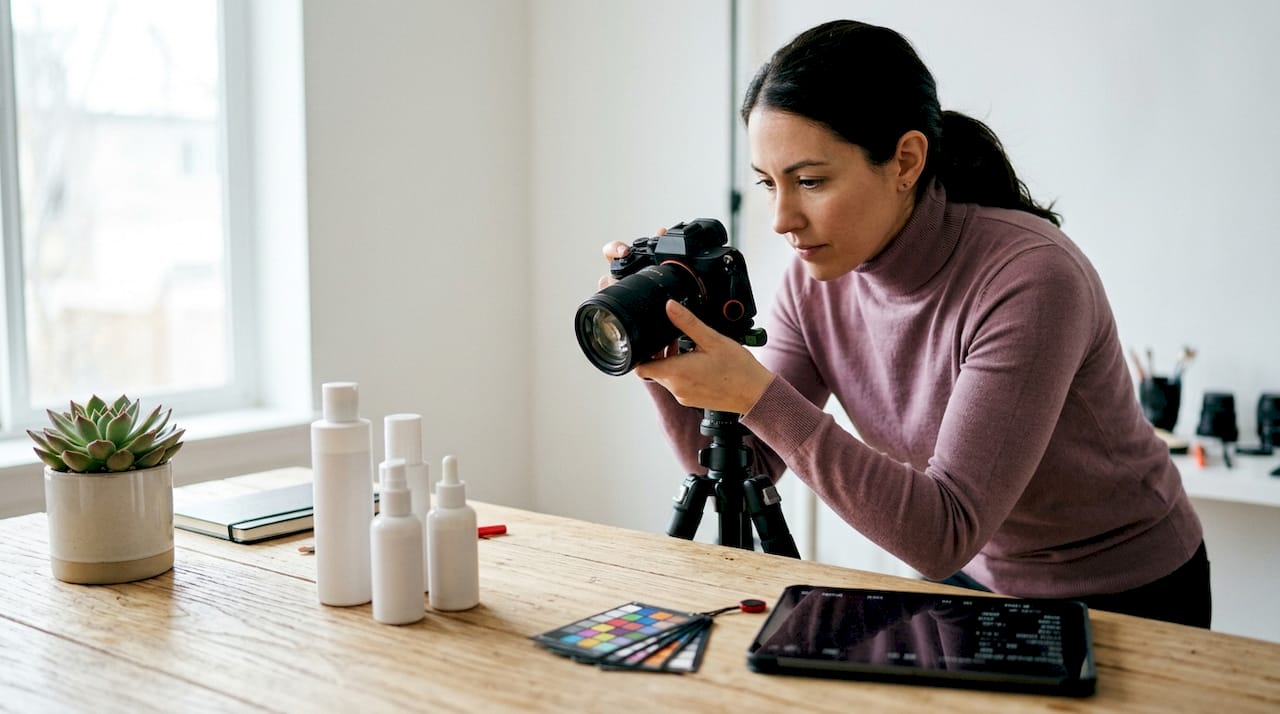
Use macro lenses and focus stacking for sharpness. Close-ups of logos or stitching lose sharpness without precise depth of field control. Focus stacking, which combines multiple exposures at different focal points, preserves crispness from the front of the subject to the back. This is non-negotiable for premium brand positioning.
Control your lighting to reveal texture. Raking light (placed at a low angle to the surface) brings out texture and dimension. Flat, overhead lighting flattens surfaces and makes materials look cheap. The goal is to make the viewer feel the material, not just see it.
Maintain consistent styling and framing. On-white product photography remains foundational because it keeps the focus on the product and maintains visual coherence across a catalogue. Use the same background, the same framing ratios, and the same colour temperature across every shoot.
Treat photography as a repeatable system, not a one-off task. Brands that build standards-driven photo systems scale faster and maintain stronger brand cohesion. Document your lighting set-up, lens choices, and styling rules so any future shoot can replicate the results.
Pro Tip: Create a one-page “shot standard” document for your brand that includes lens focal length, lighting diagram, background specification, and required angles for every product category. Hand this to any photographer you work with and your visual identity stays intact regardless of who is behind the camera.
A common pitfall is treating detail photography as an afterthought, something captured quickly at the end of a product shoot. The brands that get the most value from these images plan for them first, not last.
How businesses use branded detail photography across marketing channels
The practical applications of branded detail photography span every major marketing channel, and the return compounds when images are built into a repeatable system. High-converting product pages incorporate six to eight images including dedicated detail close-ups, and structured image sequences improve average order values by 8 to 12% even without price or copy changes. That is a meaningful lift from photography alone.
Enriched product images including macro detail photos increase customer confidence by simulating tactile inspection virtually. Shoppers engage more deeply when they can assess scale, texture, and fit through varied and detailed imagery. This is the core benefit of detail photography in e-commerce: it closes the sensory gap between online browsing and in-store handling.
Marketing channel | How detail photography is used | Business benefit |
E-commerce product pages | Image carousel with hero plus detail sequence | Higher conversion, lower return rates |
Paid social advertising | Texture and logo close-ups as scroll-stopping creative | Higher click-through rates |
Email marketing | Detail images reinforcing product quality in campaigns | Increased repeat purchase intent |
Brand catalogues | Consistent detail imagery across product lines | Cohesive brand presentation |
Packaging and print | Close-up shots repurposed for physical materials | Unified brand identity offline and online |
The Nami matcha brand case is a strong example of what a scalable visual system looks like in practice. By standardising hero images alongside sets of detail and macro shots for every SKU, Nami achieved visual consistency across their site and campaigns while enabling rapid rollout of new products. The system did not just make their images look better. It made their entire marketing operation faster.
For service businesses and corporate brands, the same principle applies. Your branded imagery, whether it is the texture of your printed materials, the detail of your workspace, or the quality of your team’s presentation, tells a story about your standards before a single word is read. Photo-driven branding works because it communicates at the speed of perception, not the speed of reading.
Key takeaways
Branded detail photography is the most direct visual tool for communicating product quality, reinforcing brand identity, and reducing purchase uncertainty across e-commerce and marketing channels.
Point | Details |
Definition is precise | Branded detail photography captures close-up product features and branded elements to communicate quality visually. |
Technical skill is required | Macro lenses, focus stacking, and controlled lighting are necessary for sharp, credible detail images. |
Consistency drives brand value | Uniform styling and framing across all detail shots transforms individual images into a cohesive brand language. |
Business impact is measurable | Structured image sequences including detail shots improve average order values by 8 to 12% without other changes. |
Systems beat one-off shoots | Brands that standardise their photography workflows scale faster and maintain stronger visual coherence across channels. |
What I have learned from watching detail photography change brands
I have watched businesses completely transform how their products are perceived online, not by changing the product, not by rewriting the copy, but by investing in proper detail photography. There is something genuinely exciting about that moment when a client sees their product captured the way it actually deserves to be seen.
What surprises most marketing professionals is how much detail photography functions as a system problem, not just a creative one. The brands I see struggling with visual consistency are almost always treating each shoot as a standalone event. The ones gaining real traction have built standards: a shot list, a lighting approach, a framing guide. They show up to every shoot with a plan, and their images compound in value over time because they all speak the same visual language.
The technology side has genuinely improved the craft. Focus stacking software, better macro lenses at accessible price points, and AI-assisted editing tools mean that the technical barriers to excellent detail photography are lower than they have ever been. But the strategic barriers, knowing what to shoot, why, and how it fits into your broader branded photography approach, remain exactly where they were. That is where the real work happens.
My honest observation after years of working with Calgary businesses: the companies that treat photography as an investment rather than an expense are the ones whose brands feel coherent, credible, and worth paying more for. Detail photography is often where that investment pays off most visibly.
— Jeff
Ready to build your branded detail photography system?
At Itsjeffb, we work with Calgary businesses and marketing teams to create clean, consistent branded imagery that holds up across every channel you use. Whether you are building out a product catalogue, refreshing your website visuals, or creating assets for a campaign launch, the approach is always the same: planned, purposeful, and built to last.
[
Every shoot is designed around your brand standards, your shot requirements, and your timeline. No guesswork, no generic results. If you are ready to see what professional branded photography looks like for your business, explore our photography pricing and let’s build something worth showing off.
FAQ
What is branded detail photography?
Branded detail photography is the intentional use of close-up images to highlight specific product features, textures, logos, and branded elements. Its purpose is to communicate quality visually and reinforce brand identity across marketing and e-commerce channels.
How does detail photography differ from product photography?
Standard product photography shows the whole item; detail photography moves in close to capture specific features like stitching, finishes, or logos. Detail shots sit within a structured image hierarchy on product pages and serve as quality proof rather than first-impression images.
Why is branded detail photography important for e-commerce?
Enriched product images including macro detail shots increase customer confidence by simulating the tactile inspection shoppers would do in a physical store. Structured image sequences including detail close-ups have been shown to improve average order values by 8 to 12%.
What equipment do you need for branded detail photography?
Macro lenses and focus stacking are the two most critical technical requirements for sharp, credible detail images. Controlled lighting, particularly raking light to reveal texture, is equally important for communicating material quality accurately.
How do you maintain consistency in branded detail photography?
Consistency comes from treating photography as a repeatable system rather than a series of individual shoots. Standardising your shot list, lighting set-up, background, and framing ratios across every product ensures your images read as a cohesive brand asset rather than a collection of unrelated pictures.
Recommended

Comments