
What is portrait photography? Calgary's complete guide
- Jeff Borchert
- Apr 13
- 9 min read
TL;DR:
Portrait photography captures personality, mood, and identity through intentional composition and lighting.
Different styles like traditional, lifestyle, and environmental suit various personal and professional needs.
Authentic connections and trust are essential, making the photographer’s skill in creating comfort irreplaceable.
Portrait photography is far more than pointing a camera at someone and pressing a button. It’s the art of revealing who a person truly is, capturing personality, mood, and identity in a single frame. For Calgary professionals, a compelling portrait can define how clients and colleagues perceive you before you’ve even spoken a word. For families, it’s a way to freeze a chapter of your story before it changes. This guide breaks down what portrait photography really means, the styles and techniques involved, and how you can use that knowledge to make smarter decisions, whether you’re refreshing your LinkedIn photo or booking a family session.
Table of Contents
Key Takeaways
Point | Details |
Portraits capture identity | Portrait photography goes beyond snapshots to reveal story, personality, and emotion. |
Different styles, unique uses | From business headshots to family lifestyle images, each portrait type fits distinct needs. |
Technique matters | Success depends on lighting, posing, and connection—not just gear or editing. |
Trends and tech evolve | AI is growing, but authentic moments from human photographers remain in high demand. |
Defining portrait photography: Beyond a simple snapshot
At its heart, portrait photography is a genre built around capturing the essence of a person. Not just their face, but their character, their energy, and the story they carry. The best portraits feel alive. You look at them and sense something real.
“Portrait photography is a genre aimed at capturing personality, identity, or mood using lighting, posing, and composition.”
That definition matters because it shifts the focus away from equipment and toward intention. A lot of people assume great portraits come from expensive cameras. They don’t. They come from skilled decision-making about light, framing, and connection with the subject.
For Calgary professionals, portraits serve a practical purpose. A strong headshot builds trust before a meeting even starts. It signals competence and approachability on your website, LinkedIn profile, and marketing materials. For families, portraits become keepsakes, physical or digital records of a moment that will never exist again in quite the same way.
What separates portraiture from casual photography comes down to a few key qualities:
Intentional composition: Every element in the frame is considered, from background to the subject’s hands.
Deliberate lighting: Light is shaped and directed to flatter the subject and support the mood.
Emotional connection: The photographer works to draw out a genuine expression, not a forced smile.
Subject focus: The person, not the setting, is always the story.
It’s also worth understanding the difference between headshots versus portraits. A headshot is a specific type of portrait, typically tighter in framing and used for professional purposes. A portrait is broader, encompassing mood, environment, and storytelling. Both matter. Both require skill.
The misconception that anyone with a modern smartphone can produce professional-quality portraits is understandable but misleading. Technical tools have improved dramatically, but the craft of reading a face, adjusting light on the fly, and guiding someone who’s nervous in front of a camera is still a human skill.
Types of portrait photography and their uses
Now that we understand the core of portrait photography, let’s explore the main styles and when each shines. Common types include traditional, lifestyle, environmental, glamour, group, and conceptual, and each serves a distinct purpose.
Portrait type | Best use case in Calgary |
Traditional (studio) | Corporate headshots, professional profiles |
Lifestyle | Families, personal branding, social content |
Environmental | Executives, creatives, tradespeople in their element |
Glamour | Personal milestones, confidence projects |
Group | Teams, corporate directories, family reunions |
Conceptual | Creative campaigns, editorial, brand storytelling |
Traditional portraits are shot in a controlled studio environment with consistent lighting. They’re ideal for Calgary headshots where a clean, polished look is the goal. Think law firms, financial advisors, and healthcare professionals.
Lifestyle portraits feel more relaxed and candid. They’re perfect for families who want to capture real moments rather than stiff poses. They also work brilliantly for entrepreneurs building a personal brand that feels approachable and human.
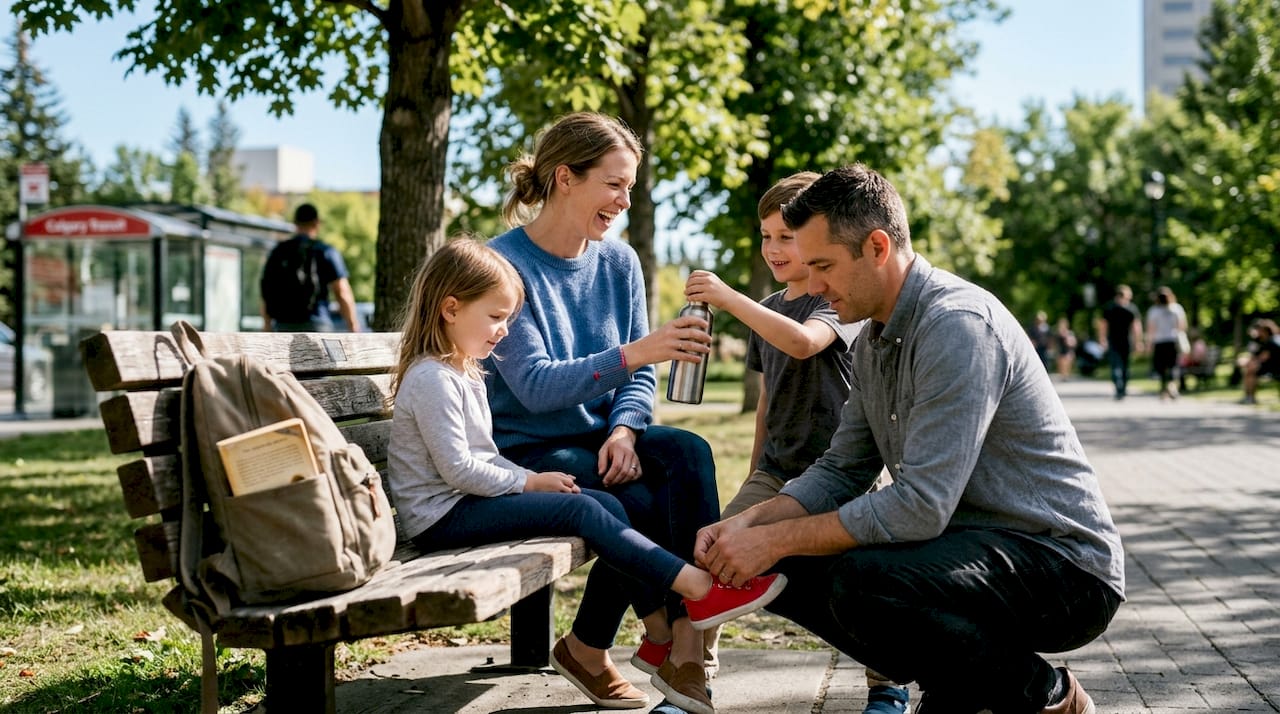
Environmental portraits place the subject in their natural context. A chef photographed in their kitchen. An architect on a job site. These images communicate expertise and authenticity in a way a plain backdrop never could. If you’re building professional photos in Calgary for a personal brand, environmental portraits are worth serious consideration.
Group portraits require careful coordination of lighting, spacing, and expression across multiple people simultaneously. For corporate teams, consistency across the group matters as much as individual quality.
Quick pointers for choosing the right style:
Choose traditional when you need polished, consistent results for business use.
Choose lifestyle when personality and warmth matter more than formality.
Choose environmental when your surroundings tell part of your story.
Choose group when team cohesion and brand consistency are the priority.
Review your LinkedIn photo tips before booking to align your portrait style with your platform goals.
Core techniques: Camera settings, composition, lighting, and posing
With a grasp of different portrait styles, it’s time to get hands-on with the creative and technical fundamentals.
On the technical side, core mechanics involve aperture, 85mm lenses, shutter speeds of 1/125s or faster, low ISO, and sharp focus on the eyes. A wide aperture (f/1.8 to f/2.8) creates that beautiful background blur that separates the subject from the environment. The 85mm focal length flatters facial proportions without distortion.
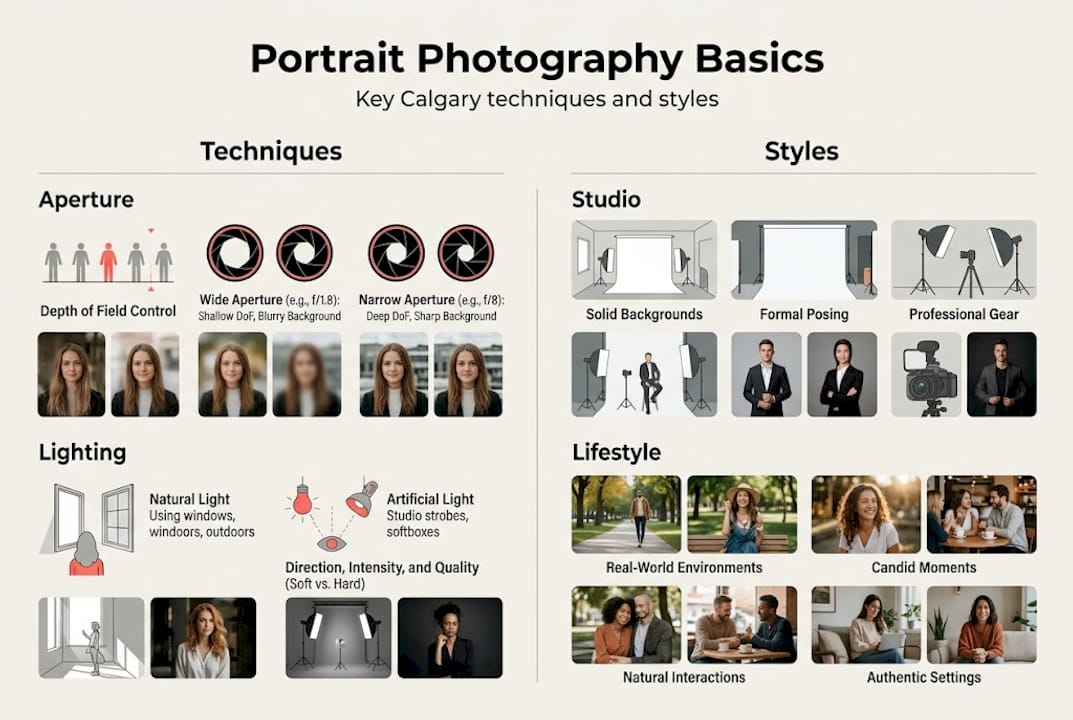
Element | Recommended setting | Effect |
Aperture | f/1.8 to f/2.8 | Blurred background, subject isolation |
Shutter speed | 1/125s or faster | Sharp, movement-free images |
ISO | 100 to 400 | Clean, noise-free files |
Focal length | 85mm to 135mm | Flattering facial compression |
Lighting is where portraits truly come alive. Key lighting patterns include Butterfly, Loop, Rembrandt, Split, Broad, and Short lighting, each producing a distinct mood and effect. Loop lighting is universally flattering and works well for most business portraits. Rembrandt adds drama and depth. Short lighting slims the face, while broad lighting widens it.
Posture and posing shape perception more than most people realise. Small adjustments, like a slight chin tilt forward and down, or turning the body at a 45-degree angle, create a more dynamic and flattering image. You can explore portrait posing in more detail to understand how body language translates to the camera.
A simple workflow for non-photographers to understand the process:
Choose your setting (studio or location) based on the portrait type.
Set your camera to aperture priority and select f/2 as a starting point.
Position your main light source at a 45-degree angle to the subject’s face.
Ask your subject to angle their body slightly away from the camera.
Focus precisely on the nearest eye.
Review and adjust based on the first few frames.
Pro Tip: In Calgary, natural light is genuinely abundant outdoors. Afternoon sessions and golden hour (the hour before sunset) deliver warm, flattering light that’s hard to replicate in a studio. If you’re shooting professional portrait techniques outdoors, plan your timing around the light.
What makes a successful portrait: Nuances, pitfalls, and Calgary context
With the fundamentals covered, success depends on understanding subtle details and how Calgary’s market is distinct.
The nuances that separate good portraits from great ones often come down to rapport. When a subject feels at ease, their expression softens, their eyes engage, and the image comes alive. Short lighting slims round faces, broad lighting widens; rapport drives authentic expressions, and locked joints create stiffness. These aren’t minor details. They’re the difference between a photo someone uses proudly and one that sits unused on a hard drive.
Common mistakes to avoid:
Straight-on poses that flatten the subject and remove dimension.
Locked knees and stiff arms that make people look uncomfortable.
Harsh overhead lighting that creates unflattering shadows under the eyes.
Overly busy backgrounds that compete with the subject for attention.
Forcing a smile rather than drawing out a genuine one through conversation.
Calgarys market for professional photography is active and growing. In Calgary, headshots range from $100 to $400, photographer salaries average around $69,000, with approximately 2,635 employed in Alberta. That context matters when you’re budgeting for a session. You want to invest in someone whose work reflects the professional image impact you’re after.
For business clients, the photo you use on your website or LinkedIn profile is often the first impression you make. For families, a portrait session is an investment in memory. For creatives, it’s part of the brand story.
Pro Tip: Before your session, spend five minutes talking with your photographer about what you want the image to communicate. That conversation sets the tone and helps your photographer draw out the right energy. Explore Calgary’s best headshots to see what a well-executed portrait can look like.
Emerging trends: AI headshots and traditional portrait value
Let’s look forward. What’s changing, and what stays timeless in the evolving art of portrait photography?
“The AI headshot market exceeded $350M in 2025, but human connections continue to drive premium portrait demand.”
AI tools can generate polished-looking headshots at a fraction of the cost. For some use cases, that’s a reasonable trade-off. But for Calgary professionals and families who want images that actually feel like them, professional portraits still hold irreplaceable value.
Choose AI headshots when budget is tight and the use case is low-stakes.
Choose a human photographer when the image needs to build trust, reflect personality, or represent your brand.
Always choose a human photographer for family portraits, milestone sessions, and anything where authentic emotion matters.
Why authentic connections matter more than ever
Here’s my honest take, shaped by years of photographing people across Calgary: the technical side of portrait photography is learnable. Aperture, lighting ratios, focal length. Those are skills. But the thing that actually makes a portrait resonate? That’s about trust.
When someone sits down in front of my camera, they’re often a little nervous. Maybe a lot nervous. My job isn’t just to press a shutter. It’s to create a space where they feel comfortable enough to be themselves for a few minutes. That’s where the real image lives.
I see a lot of conversation in the industry about AI and automation, and I understand the appeal. But a generated image can’t capture the moment someone finally relaxes and laughs genuinely. It can’t read the room and adjust. It can’t notice that a subject’s left shoulder is slightly tense and quietly ask them to shake it out.
For Calgary professionals building a brand, and for families preserving a chapter of their lives, the experience behind the photo matters as much as the photo itself. A LinkedIn photoshoot done well isn’t just about a nice image. It’s about walking away feeling seen and confident. That’s what I’m always working toward.
Ready to capture your best portrait?
If this guide has sparked something, whether you’re a professional ready to refresh your brand or a family thinking about capturing this season of life, I’d love to work with you.
[
At Jeff B Photography, every session is designed to be easy, guided, and genuinely enjoyable, even if you’re not someone who loves being in front of a camera. From polished corporate headshots to warm family portraits, the goal is always the same: photos you’re proud to use and display. Book your Calgary portrait session today, or discover Calgary’s best headshots to explore what’s possible. Let’s make sure your story is told with care!
Frequently asked questions
What is the main purpose of portrait photography?
Portrait photography aims to capture personality, identity, and mood of an individual or group through creative use of lighting, posing, and composition.
How much do professional headshots cost in Calgary?
Professional headshots in Calgary typically range from $100 to $400 per person, depending on session length and the photographer’s experience.
Which type of portrait should I choose for LinkedIn or professional branding?
Choose a traditional or business headshot with loop or Rembrandt lighting for a polished, professional look that builds trust at a glance.
Are AI-generated headshots as good as traditional portraits?
AI headshots offer affordable convenience, but human photographers excel at building rapport and capturing authentic expressions, making premium portraits more valuable for serious professional use.
Is outdoor or studio portrait photography better in Calgary?
Both have real advantages. Outdoor shoots leverage natural light and scenery for warmth and authenticity, while studios provide controlled settings for consistent, polished results.
Recommended

Comments