
Why clean photos for business actually matter
- Jeff Borchert

- May 20
- 8 min read

TL;DR:
High-quality, consistent, and well-lit photos build trust, improve conversions, and reinforce brand professionalism online.
Regularly auditing, investing in professional imagery, and aligning visuals across platforms enhance customer perception and reduce misunderstandings.
You can have a polished website, a sharp pitch, and a genuine product, but if the photos tell a different story, clients notice. Understanding why clean photos for business is such a critical conversation right now comes down to one uncomfortable truth: in digital spaces, your photos speak before you do. They load before your words. They register before your credentials. And whether you are a solo consultant updating your LinkedIn profile or a 50-person firm refreshing your team page, the quality of your imagery shapes how seriously people take you within seconds.
Table of Contents
Key takeaways
Point | Details |
Clean photos build immediate trust | Professional, clear imagery signals competence before a single word is read. |
Photo quality directly affects conversions | High-quality images can produce dramatically higher purchase and engagement rates. |
Consistency is as important as quality | A unified photo style across platforms reinforces brand credibility and recognition. |
Professionals outperform DIY in most cases | Hiring a photographer pays off in reduced returns, stronger impressions, and better brand cohesion. |
Photo standards are evolving with design trends | Modern platform aesthetics require cleaner, lighter images with more intentional negative space. |
What “clean photos” actually means for business
The phrase “clean photos” gets thrown around a lot, but let’s get specific. A clean photo is not just one that looks nice. It is one where every visual element earns its place.
The core attributes include:
Clarity and sharpness. The subject is in crisp focus with no motion blur or soft edges that distract from the message.
Controlled lighting. Even, flattering light that reveals texture and colour without harsh shadows or blown-out highlights.
Intentional composition. The frame is purposeful. Nothing in the background competes with the subject for attention.
Colour accuracy. Tones reflect reality. Skin looks like skin. Products look like products. Nothing is oversaturated or artificially cooled to the point of confusion.
Appropriate resolution. The image holds up at the sizes and formats required, whether that’s a website banner, a LinkedIn profile photo, or a printed conference programme.
What trips most businesses up is the last item on that list plus one more: visual coherence. A photo can be technically clean and still feel wrong if it clashes with your brand’s personality, industry expectations, or the visual language of your other assets. Poorly maintained or cluttered backgrounds reduce perceived professionalism even when the subject itself is sharp and well-lit.
Pro Tip: Before your next shoot or photo update, pull all your current business photos into a single folder and view them together. Inconsistencies in tone, background, and lighting become obvious immediately. That gut reaction your potential clients have? You just had it too.
How clean photos shape customer trust and buying decisions
Here is where the numbers start making the case for you. This is not about aesthetics for aesthetics’ sake. Clean photos directly affect whether people trust you, buy from you, and come back.
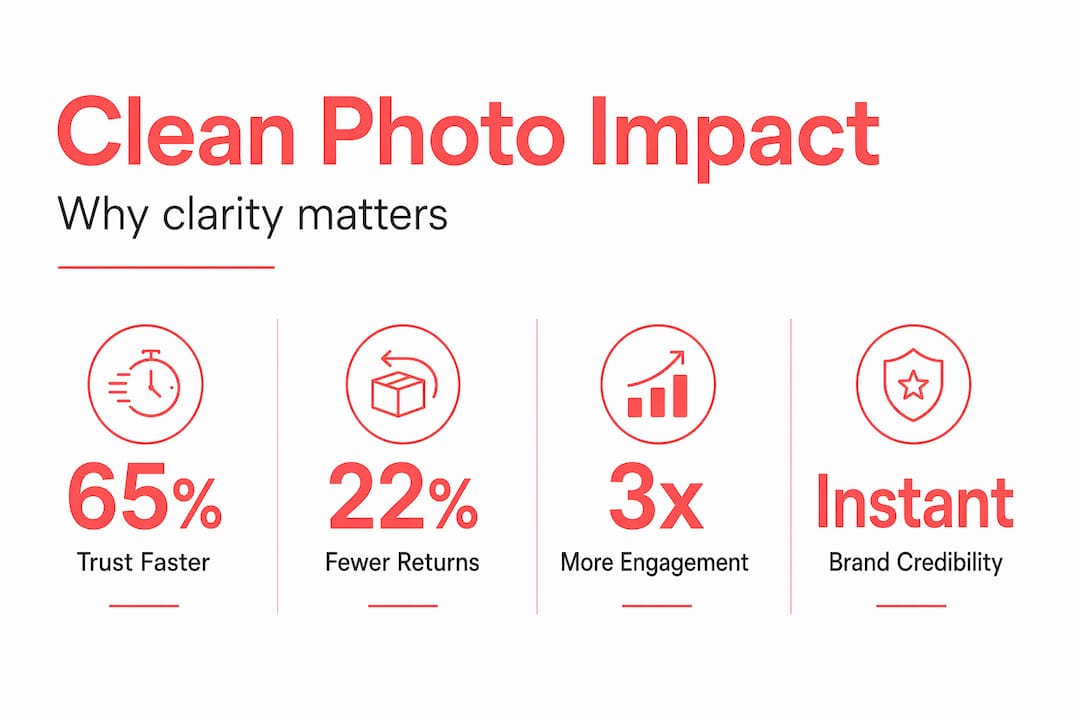
High-quality product photos show a 94% higher conversion rate than low-quality counterparts. That figure tends to stop people in their tracks, and it should. It means the difference between a photo that looks like it was taken in a hurry and one that was thoughtfully composed and lit could literally double your results.
Trust is not just built through what you say. It is built through what people see the moment they encounter your brand.
Returns tell an equally telling story. 22% of online returns happen because the product looked different in person than in the photos. For service businesses, the analogy holds. When your headshot or team photo misrepresents who shows up, you start a client relationship with a small breach of trust. That matters.
It goes further than individual transactions. Better photos create a compounding feedback loop of increased visibility, trust, and ultimately sales success. Platforms reward engagement. Engaged audiences share more. Shared content brings new audiences. It all starts with whether the first image stops the scroll or loses it.
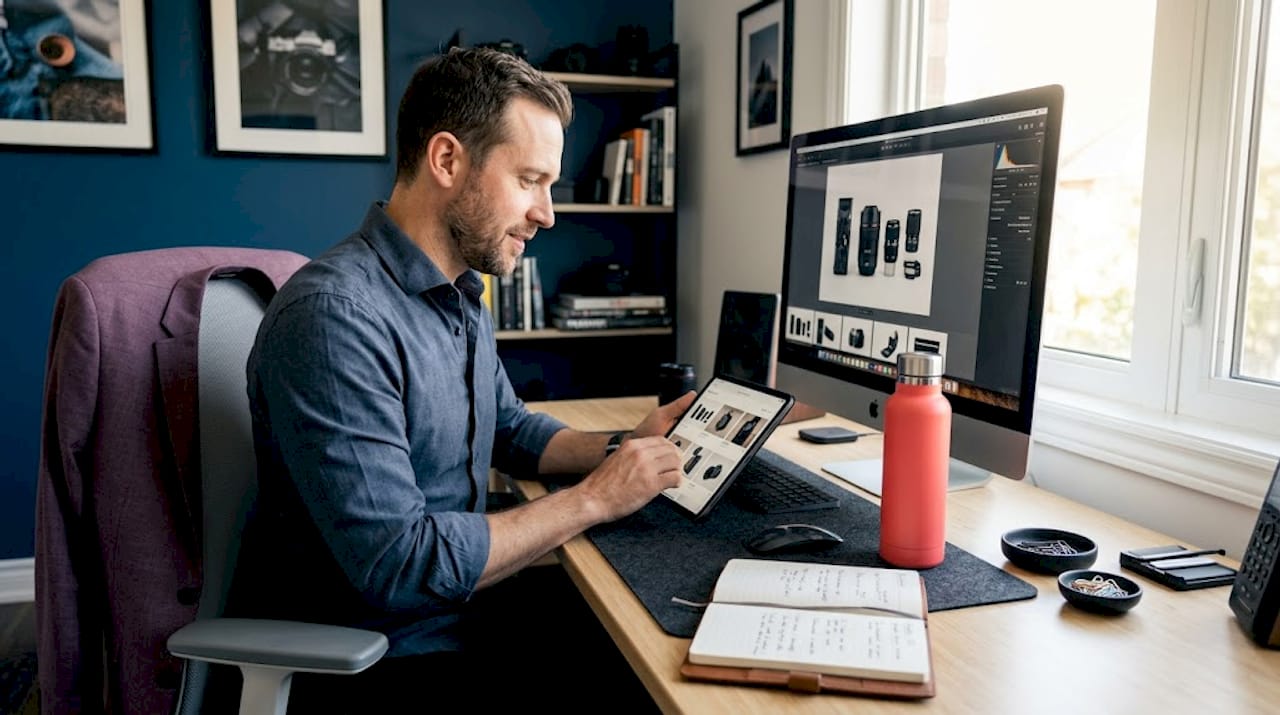
And authenticity plays a surprising role here. Showing the actual item or person with a clean, well-lit photo builds more trust than polished stock imagery that lacks authenticity. People can feel the difference between a real photo and a staged one, even if they cannot articulate why.
Clean photos and your brand’s digital presence
Your website, LinkedIn profile, social media, proposals, and pitch decks are not separate things. They are different windows into the same room. If the photos in each window look different, disconnected, or inconsistent, the room feels cluttered before anyone steps inside.
Here is a comparison that illustrates exactly why this matters:
Photo type | Perception it creates | Business impact |
Professional headshot with clean background | Trustworthy, approachable, credible | More connection requests, callbacks, client inquiries |
Casual selfie or cropped group photo | Unprepared, informal, low investment | Clients question whether you take your work seriously |
Generic stock photo of person at desk | Impersonal, forgettable, inauthentic | Fails to differentiate; audiences do not connect |
Consistent branded team photos | Cohesive, established, professional | Builds confidence in your organisation as a whole |
The role of clean images for online presence extends beyond looking good. It communicates that you invest in your business. That you care about details. Those are qualities clients want in the people they hire and the companies they trust with their money.
For individual professionals, your headshot is often the most viewed photo you will ever take. It appears on your email signature, your speaker bio, your press coverage, your website about page. A photo that feels confident and authentic in all of those contexts is genuinely hard to achieve without a professional setup. The importance of quality images for personal branding is not about vanity. It is about showing up to the conversation looking like you belong there.
Practical steps to achieve and maintain clean photo standards
You do not need a massive budget or a full rebrand to raise your photo standards. What you need is intention and a clear process.
Audit what you have. Gather all business photos currently in use across your platforms and evaluate them against the clean photo criteria listed above. Be honest. Most businesses find at least one or two that need to go.
Hire a photographer for the foundational shots. Your headshot, your team photos, and your primary branding images are not good candidates for DIY. These are the photos that will carry the weight of your first impression for the next one to three years. Invest accordingly. Consistent lighting across photo variants builds customer trust in colour accuracy and brand professionalism.
Create a simple style guide for your photography. Document the backgrounds, tones, and compositions that align with your brand. This keeps photos consistent even when they are taken at different times or locations.
Optimise for the platforms you use most. A photo that looks great on your website might be cropped awkwardly on LinkedIn or lost in a small circle on a mobile app. Provide multiple photo angles and scales and export each image in the right dimensions for its intended context.
Schedule a regular review. Set a reminder every 12 to 18 months to review your key business photos. Headshots in particular age quickly. Outdated photos undermine the trust that clean, current ones build.
Pro Tip: When working with a photographer, share examples of photos you love and photos you actively dislike. This is not about being difficult. It gives your photographer clear direction and saves everyone time. The best sessions are collaborative, not one-sided.
For teams, on-location headshot sessions are a practical choice. Everyone gets updated at the same time, in the same setup, which creates the visual cohesion your brand needs. Branding photography for professionals has been shown to generate significantly higher content views and engagement, which makes the investment easy to justify.
Photo trends shaping business imagery in 2026
The way we consume content is changing the standards for clean business photography. It is not just about sharp and well-lit anymore. Platform design is now part of the equation.
Trend | What it means for your photos |
Minimalist UI aesthetics | Photos need open negative space so overlaid text and interface elements stay readable |
Natural and authentic tones | Over-processed, heavy-filter images feel outdated; clients respond better to genuine looks |
Adaptive cropping demands | A single photo needs to work in multiple aspect ratios across different devices and platforms |
Light, airy colour palettes | Saturated or heavily contrasted images clash with modern website and app design systems |
Apple’s Liquid Glass design direction is a clear example. Visual assets now need to maintain clarity under UI overlays to align with modern design systems, which means photos with heavy textures, dark gradients, or chaotic backgrounds will feel out of place on forward-looking digital properties.
The practical takeaway? When you invest in photography, brief your photographer on where and how the images will be used. A photo styled for a dark, editorial brand feels entirely different from one meant to sit inside a clean, white website. The impact of visuals on business is compounding as design and photography become increasingly intertwined.
My honest take on why businesses undervalue photos
I have worked with a lot of business owners and professionals in Calgary, and the hesitation I hear most often is some version of “I’ll get proper photos done when things are more settled.” I understand the instinct. There are always more pressing things.
But what I have seen over and over is that the photos you have right now are already doing work, for better or worse. Every week you keep a dated headshot or a blurry team photo on your website is a week those images are shaping how potential clients see you. The cost is quiet, but it is real.
The businesses that invest in professional photography for their brand are not doing it because they have spare money. They do it because they understand that perception is part of the product. Clean, consistent photos signal that you run a tight operation. They say, without a single word, that you pay attention to details.
And here is the thing I have noticed most: people who finally book a proper session and see the results always say the same thing. They wish they had done it sooner.
— Jeff
Ready to put clean photos to work for your brand?
At Itsjeffb, we make the process genuinely easy. Whether you need a single polished headshot or updated photos for your entire team, every session is designed around your schedule, your brand, and getting you images you are actually excited to use.
[
Check out the headshot monthly special for a high-value session at a price that makes the decision simple. For organisations looking to update their team at once, our on-location team headshots deliver consistent, professional results without pulling your people out of the office for a full day. Explore Calgary headshot pricing to find the right fit, and reach out to start the conversation. Your next great business photo is closer than you think!
FAQ
What makes a photo “clean” for business use?
A clean business photo has sharp focus, even lighting, a distraction-free background, and accurate colour. It presents the subject clearly without visual clutter competing for attention.
Why do clean photos matter more than any other marketing asset?
Photos register before text in digital environments and form your first impression in most online spaces. Listings with high-quality photos consistently attract more attention and convert at higher rates than those without.
Can I use a phone photo for my business headshot?
Modern smartphones can capture decent images, but achieving consistent lighting, composition, and the clean background quality that builds client trust is difficult without professional equipment and guidance. For foundational brand photos, a professional session is worth it.
How often should I update my business photos?
Most professionals benefit from updated headshots every one to two years, or sooner if your appearance, role, or brand positioning changes significantly. Team photos should be refreshed whenever your team changes or when a visual inconsistency becomes noticeable across your platforms.
How do clean photos reduce returns and client confusion?
Clear, accurate photos set honest expectations. Research shows 22% of returns happen because a product or service looked different than expected. Clean photos close that gap by showing exactly what a client will receive.
Recommended


Comments