Headshot photography tips for Calgary professionals

TL;DR:
A strong headshot is one of the most impactful personal branding tools for Calgary professionals, shaping perceptions before any words are spoken.
Preparation, including wardrobe, lighting, background, and expression, ensures your images convey credibility and authenticity effectively.
Your LinkedIn profile photo is working for you right now, or working against you. For Calgary business professionals, a strong headshot is one of the highest-leverage personal branding moves you can make. It shapes how potential clients, colleagues, and employers perceive you before a single word is exchanged. Yet most people walk into a headshot session without a plan. These headshot photography tips will change that. From wardrobe choices and headshot lighting techniques to posing and expression, here is everything you need to walk in prepared and walk out with photos you are genuinely proud to use.
Table of Contents
Key Takeaways
Point | Details |
Purpose shapes your headshot | Define where your headshot will be used to guide style, lighting, and wardrobe choices. |
Wardrobe simplicity wins | Choose solid colours and well-fitted outfits that reflect your industry and avoid distractions. |
Flattering lighting matters | Opt for soft directional or studio lighting to add dimension and highlight your best features. |
Pose for authenticity | Slight body angles, relaxed posture, and natural expressions make you look approachable and confident. |
Collaboration enhances results | Work closely with your photographer to reveal your genuine personality and ease in front of the camera. |
Key criteria to consider for your professional headshot
Before you book a session or step in front of a lens, it helps to understand what actually makes a headshot work. A great image is not an accident. It is the result of several deliberate choices coming together at once.
According to professional headshot fundamentals, the most impactful images balance multiple elements at once. Lighting, background, wardrobe, and expression all work together to convey credibility and personality. Miss one, and the whole image can feel slightly off, even if viewers cannot pinpoint why.
Here is a practical headshot session checklist to guide your thinking before the shoot:
Purpose: Know where your headshot will live (LinkedIn, your website, press materials, a conference programme) because context shapes style.
Wardrobe: Choose clothing that aligns with your industry and the impression you want to make.
Lighting: Consider whether you want a relaxed, natural feel or a polished, studio look.
Background: Simple and clean almost always wins. Busy environments compete with your face.
Posture and pose: Upright but relaxed signals confidence without rigidity.
Expression: Warm, present, and approachable. The goal is connection, not a performance.
Eye focus: Sharp, engaged eyes are the anchor of any great business headshot essential.
Think of these as the building blocks of your headshot session checklist for professionals. Nail them, and the technical details almost take care of themselves.
Wardrobe and grooming tips for Calgary business headshots
What you wear in a headshot sends a signal before your expression even registers. The wrong outfit pulls focus away from your face. The right one makes you look like exactly who you are, only sharper.
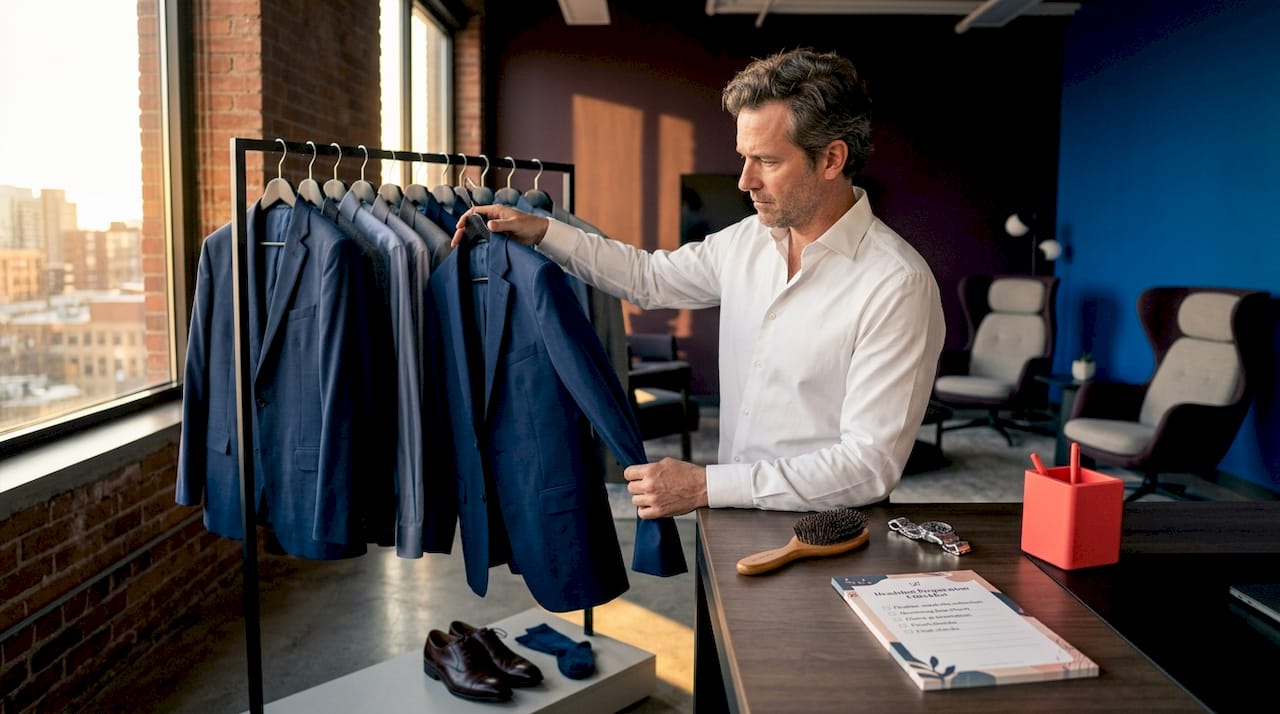
For corporate headshot wardrobe choices, industry matters. Solid, muted colours work across the board because they keep the viewer’s attention on you. Solid colours like navy or charcoal suit finance and legal professionals, while blues and greens photograph beautifully for tech and real estate. Creative fields can push slightly bolder, but restraint still pays off.
Here is what to pack in your wardrobe kit:
Solid colours over patterns. Stripes, plaids, and busy prints create visual noise and can distort under certain lighting conditions.
Avoid logos and brand marks. They date the image and can feel distracting.
Skip stark white. It tends to blow out under studio lighting and can flatten your complexion.
Bring one to two outfit options. Even a jacket swap can give you noticeably different looks without extra effort.
Well-fitted clothing reads as polished. Ill-fitting clothes, regardless of quality, signal the opposite.
Grooming is equally important. A fresh haircut, done one to three days before the shoot, looks intentional without looking too freshly cut. For makeup, go camera-friendly over everyday: slightly more definition around the eyes and brows photographs well without feeling overdone. Bring touch-up tools to the session. Oil, flyaways, and lint are all noticeable in high-resolution images.
Pro Tip: Timeless styles photograph better than trends. A look that feels classic today will still feel current when you update your LinkedIn profile two years from now.
Check out this headshot preparation advice for a more detailed pre-shoot breakdown if you want to go deeper on prep.
Lighting and background choices to enhance your headshots
Lighting is where technical skill and artistic feel intersect. It is also one of the most misunderstood parts of a professional headshot setup. Good lighting is not about brightness. It is about direction, quality, and what it does to your face.
Soft, directional light flatters skin and creates subtle shadows that add dimension without being dramatic. It also produces catchlights, those small bright reflections in the eyes that make a subject look alive and engaged. Without catchlights, even a technically sharp image can feel flat and distant.
Natural window light has a warm, relaxed quality that works well for lifestyle-oriented or approachable brand images. But it shifts with clouds, time of day, and season. That variability is fine for individual shoots on a clear afternoon but becomes a real problem when you need consistent results across a corporate team. Studio lighting solves this by being fully repeatable. Same setup, same result, every single time.
When it comes to headshot photography lighting tips, placement matters enormously. A softbox positioned above eye level and angled slightly downward creates what photographers call a “short light” or “Rembrandt-adjacent” setup. Flat lighting conveys honesty and openness, while adding a little shadow along the z-axis adds engagement and depth without obscuring the eyes. The style should match your brand message.
Here are three steps to assess your lighting and background before shooting begins:
Check light softness and catchlights. Look directly at the light source and confirm it creates a soft, flattering quality with visible catchlights in the subject’s eyes.
Confirm the background colour works with the outfit. A grey background and a grey blazer flatten each other. Choose contrast that keeps the subject distinct.
Scan for distracting objects. Nothing should appear to jut from the subject’s head. Lamp posts, shelves, and door frames are the usual culprits.
These corporate headshot lighting tips apply whether you are shooting in a studio or on location in a Calgary office. The principles do not change; only the tools do.
Mastering pose and expression for authentic professional headshots
Posing for business headshots does not mean freezing into a stiff, formal stance. It means shaping your body and face in ways that feel natural on camera, even if they feel slightly deliberate in the moment.
Start with your body. A small angle turn away from the camera, with your face brought back toward the lens, creates shape and a natural silhouette. It is flattering for almost everyone. Paired with tall but relaxed posture (shoulders back, tension released), it communicates confidence without rigidity.
The chin is underrated. Bringing it slightly forward and angling it just a touch downward sharpens the jawline and brings the eyes into focus. It feels odd at first. It photographs beautifully.
For expression, aim for mid-conversation energy. Not a posed smile, not a blank expression, but the look you have when you are genuinely interested in what someone is saying. Warm, present, and real. Continuous shooting helps capture these moments as they happen, rather than forcing a held expression.
“When clients see their images on the back of the camera mid-shoot, something shifts. They relax. They stop performing and start being themselves. That is when the real portraits happen.” (Ivan Weiss)
Good photographers give clear, specific directions like “tilt your chin slightly left” rather than vague ones like “look natural.” Specific language produces better results, faster.
Pro Tip: Practise the “soft smile” before your session. Gently lift the corners of your mouth and let your jaw relax completely. It is more approachable than a full grin and far more engaging than a neutral face. A mirror is your friend here.
For more guidance, this piece on professional posing and expression walks through common scenarios step by step.
Comparing headshot options to make the right choices for your brand
Different combinations of lighting, wardrobe, background, and pose serve different professional brands. Here is a side-by-side comparison to help you find your fit.
Element | Option A | Option B | Option C |
Lighting style | Flat (open, honest) | Z-axis shadow (engaged, dimensional) | Dramatic (bold, high-contrast) |
Wardrobe by industry | Navy/charcoal (finance, law) | Blues/greens (tech, real estate) | Bolder tones (creative, media) |
Background | Studio plain | Office, softly blurred | Outdoor, shaded natural setting |
Pose | Direct facing, forward | Small angle turn | Environmental, contextual |
Best impression | Authoritative, approachable | Confident, dynamic | Personable, grounded |
Industry and role genuinely shape which combination lands best. A litigation lawyer and a UX designer are both professionals, but the signal their headshot needs to send is entirely different.
A few takeaways from this comparison:
Plain studio backgrounds work for most corporate uses and are the safest choice for team consistency.
Blurred office settings add context and warmth but require a clean, controlled environment to avoid visual clutter.
Dramatic lighting is best used intentionally. It can read as powerful in the right context or overwrought in the wrong one.
The best headshot factors are always the ones that align with how you want to be perceived in your specific field. Start there, then work backward to the technical choices.
Why authenticity and collaboration trump perfect setups in headshots
Here is something I have come to believe firmly after years of photographing Calgary professionals: technical perfection does not make a great headshot. Connection does.
You can have the best softbox placement in the city, a perfectly pressed navy blazer, and a pristine grey backdrop. If the person in front of the lens is uncomfortable, performing, or disconnected, the image will feel exactly that way. Viewers are remarkably good at sensing inauthenticity, even in a thumbnail.
The relationship between photographer and subject matters as much as any piece of equipment. When someone feels guided rather than directed, relaxed rather than managed, they reveal something real. Building rapport with subjects is not a soft skill on the side. It is the actual work.
I also think over-retouching is quietly hurting a lot of professional headshots right now. A smoothed-out, digitally flattened face might look polished at first glance, but it removes the specific human details that make someone memorable and trustworthy. The line between polished and plastic is thinner than most people realise.
What I find genuinely exciting about great headshot photography is that it is collaborative. You are not a passive subject. The best images come from a stress-free headshot session where there is real dialogue, experimentation, and a shared commitment to finding the version of you that your audience will connect with. That is what good visual storytelling for branding actually looks like in practice.
So yes, master the wardrobe tips. Understand the lighting setups. Use the checklist. But walk into the session ready to actually be yourself. That is where the magic lives.
Discover Calgary’s best headshots with Jeff B Photography
Ready to put these headshot photography tips into action with a photographer who genuinely loves this work? At Jeff B Photography, we make the whole process feel easy and worth it.
[
Whether you are a solo professional refreshing your LinkedIn presence or a Calgary corporate team needing consistent, on-location professional headshot services, we have got you covered. Sessions include outfit guidance, expert direction for posture and expression, and a relaxed, collaborative approach that brings out your best. No stiffness, no guessing, no awkward silences. If you want a deeper look at what goes into each session before you book, our business headshot tips guide and stress-free headshot preparation walkthrough are great places to start. Let’s create something you are actually excited to share!
Frequently asked questions
What should I wear for my Calgary business headshot session?
Wear solid, muted colours suited to your field, like navy or charcoal for finance and law or blues and greens for tech and real estate, and avoid patterns, logos, or stark white, which all compete with your face.
How can I appear approachable in my headshot?
Turn your body slightly away from the camera while bringing your face toward the lens, hold a soft smile with a relaxed jaw, and make direct eye contact to create a warm, engaging impression.
Is natural light better than studio lighting for headshots?
Natural light suits relaxed lifestyle-style images but varies with weather and time of day, while studio lighting delivers consistent, repeatable results that are ideal for polished professional branding and corporate team photos.
How do photographers help me look natural during a headshot?
They build rapport and trust throughout the session, provide specific posing directions rather than vague ones, shoot continuously to catch genuine in-between expressions, and often share images mid-shoot to help you relax and settle into yourself.
Recommended

Comments